Transforming Plant-Based Dinner Parties With Botanical Tasting Flights
A guest presses a stone pestle into still-warm toasted coriander seeds at the center of the dining table, releasing a burst of citrus-pine volatiles into the room before the first course arrives. For a table of six, this opening demonstration requires just 1 teaspoon of whole coriander seed warmed in a dry skillet over medium-low heat for 60 to 90 seconds. Moving the seeds continuously and pulling them from the heat as soon as they become fragrant prevents dark browning. After resting on a room-temperature dish for 30 to 60 seconds so they remain warm rather than scorching, the seeds are ready for crushing.
Standard dinner parties often bury herbs and spices inside complex sauces where individual flavors blur together. Isolating single botanicals on neutral plant-based carriers turns a passive meal into an interactive sensory workshop.
Hosts can plan a 20- to 30-minute tasting session before dinner, presenting nine distinct samples across three thematic groups with a 1- to 2-minute pause between flights. Guests start by tasting an unseasoned spoonful of the base carrier to establish a sensory baseline, followed immediately by the same carrier topped with a single botanical. Using a two-pass tasting protocol sharpens palate awareness: participants smell the freshly crushed botanical first, then taste it against the carrier. This sequence trains the palate to separate olfactory cues from tongue-level taste receptors, helping diners recognize how coriander projects a strong lemony aroma without introducing actual sourness like lemon juice, while bringing diverse plant polyphenols into the menu.
Selecting Neutral Lipid Carriers and Tabletop Tools
Most aromatic compounds in culinary spices are fat-soluble. They require a lipid base to dissolve volatile molecules, coat the tongue, and deliver a complete flavor profile. Selecting the right plant-based recipes for your bases depends on matching temperature, texture, and background flavor to the specific botanicals on the board.
- Unsweetened Silken Tofu Cream: For six guests sampling three toppings, blend 180 to 240 grams of unsweetened silken tofu until completely smooth. This yields roughly 2 teaspoons per person for each topped sample, leaving extra plain tofu for baseline comparisons. Its cool temperature and clean, smooth texture give delicate herbs an ideal platform.
- Warm Cannellini Bean Purée: Blend 240 grams of drained cannellini beans with 1 tablespoon of olive oil and 2 to 4 tablespoons of warm water until spoonable rather than soup-like. Serve the mash at a comfortably warm 40 to 45°C so the heat distributes earthy spices like cumin and black pepper without dominating the sensation on the tongue.
- Cold-Pressed Oils With Crusty Sourdough: To highlight mouthfeel and aroma directly, pour 1 teaspoon each of extra-virgin olive oil and mild avocado oil into separate dishes alongside small pieces of the same sourdough loaf. Tasting the oils plain first reveals how extra-virgin olive oil contributes its own natural bitterness and peppery throat catch, while mild avocado oil offers a quieter canvas.
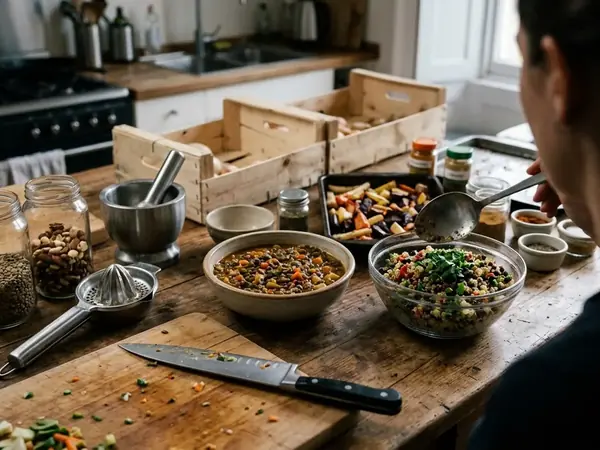
Proper tabletop mechanics keep the tasting focused and clean. Set each place with three small ceramic tasting spoons, an individual mortar and pestle for table-side crushing, and 3 to 4 crisp cucumber slices. Pour both still water and plain sparkling water for every guest; while sparkling water refreshes the palate, its carbonation creates a physical prickling sensation that can mimic spice pungency if used alone.
Three Curated Spice and Herb Flights With Tasting Prompts
Building each flight on a single consistent carrier ensures that only the botanical variable changes from spoon to spoon. Guide the table through every sample using three consistent spoken prompts: "What do you smell before tasting? What arrives first: sweetness, sourness, bitterness, saltiness, or umami? What remains after 15 to 20 seconds: aroma, dryness, warmth, or tingling?" Framing the discussion this way helps guests recognize that pungency and astringency are physical sensations rather than basic tastes.
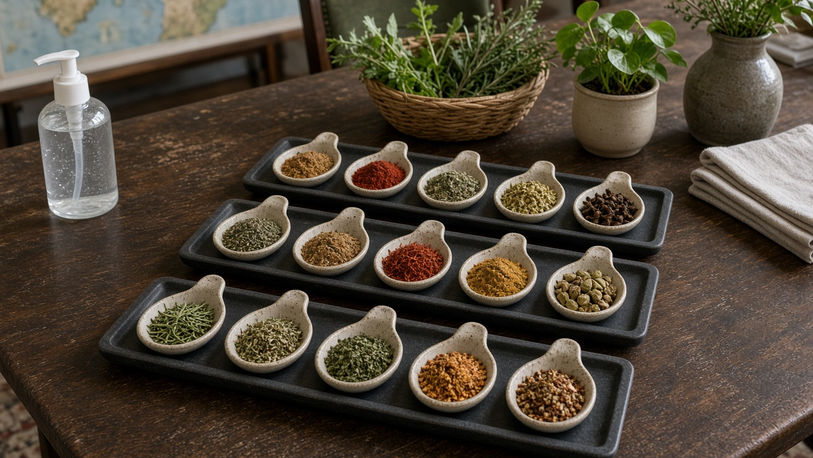
Flight 1: The Earthy and Anti-Inflammatory Trio
Divide 12 tablespoons of warm cannellini bean mash evenly among three bowls to supply six 2-teaspoon tastes per bowl. Sequence the tasting intentionally so intense compounds do not overwhelm subtler ones:
- Earthy Turmeric: Season the first bowl with 1/8 teaspoon of ground turmeric to establish an earthy, slightly bitter baseline.
- Toasted Cumin: Toast whole cumin seeds in a dry pan over medium-low heat for 60 to 120 seconds, shaking frequently until nutty and slightly darker, then cool before grinding. Stir 1/4 teaspoon of this freshly ground cumin into the second bowl.
- Cracked Black Pepper: Finish with 1/16 to 1/8 teaspoon of freshly cracked black pepper in the third bowl so its lingering heat arrives last.
After evaluating the individual bowls, offer a fourth combined bite pairing the turmeric and black pepper together. In clinical nutrition, piperine in black pepper is frequently studied as a modifier of curcumin bioavailability, though a peppered spoonful of beans at a dinner party remains a culinary flavor exercise rather than a standardized therapeutic dose.
Flight 2: The Citrus-Terpene Herbal Progression
Divide 12 tablespoons of whipped silken tofu across three bowls. Add 1/2 teaspoon of finely minced fresh lemon verbena to the first bowl, 1/4 teaspoon of freshly crushed coriander seed to the second, and 1/4 teaspoon of plain ground sumac to the third. Always check the sumac ingredient label beforehand to confirm it contains no added salt.
This progression illustrates the sensory split between citrus aroma and physical acidity. Both lemon verbena and coriander seed deliver bright citrus aromatics through volatile terpenes while leaving the tofu carrier completely non-acidic. Sumac shifts the sensory profile entirely: its sharp sourness comes from organic acids like malic acid, while its berry tannins create a drying, astringent finish across the palate.
Flight 3: The Sweet-Pungent Warming Board
Prepare 18 crisp apple slices and coat each slice with 1/2 teaspoon of unsweetened almond butter. Divide the slices into three groups of six: dust the first group with 1/8 teaspoon of Ceylon cinnamon, top the second with the finely ground seeds from 2 green cardamom pods, and finish the third with 1/2 teaspoon of finely grated fresh ginger. Guests experience how distinct phenolic compounds generate aromatic sweetness and lingering physical warmth without relying on capsaicin heat.
Blooming Mechanics and Herb Timing for Holistic Wellness
How a host applies heat in the kitchen shifts both the volatile aromatics reaching the nose and the extraction of fat-soluble compounds. Demonstrating the contrast between dry-toasting and oil-blooming with two small batches of cumin clarifies this culinary chemistry. While dry-toasting develops deeper roasted notes, oil-blooming dissolves lipid-soluble aromatics directly into the fat that will season the dish.
To run a table-side blooming demonstration, warm 1 tablespoon of olive oil over low to medium-low heat, add 1/2 teaspoon of lightly crushed cumin seed, and stir for 30 to 60 seconds until fragrant without letting the oil smoke. When working with powdered spices like ground turmeric or ground cumin, reduce the blooming time to just 15 to 30 seconds before stirring in the moist bean purée; ground spices expose far more surface area than whole seeds and scorch rapidly. Use gentle sizzling, color shifts, and rising fragrance as your stopping cues. Heat drives extraction, release, and degradation simultaneously, meaning a stronger aroma in the kitchen indicates volatile release into the air rather than a higher concentration of antioxidants absorbed at the table.
Preserving Fresh Herb Volatiles: Match your preparation timing to the structure of the leaf. Tear or chop delicate soft herbs like basil, cilantro, and mint during the final 5 to 10 minutes of prep and fold them into the carrier immediately before serving to capture their brightest volatile aromatics. For hardy woody herbs like rosemary, thyme, and oregano, infuse a small sprig in warm oil over low heat for 2 to 4 minutes, watching thin leaves closely so they never blacken, and remove the stem before dressing the dish.
Evaluating culinary herbs and spices as dietary sources of antioxidants changes how hosts view their spice rack in the context of holistic wellness. By weight, dried culinary botanicals such as clove, oregano, and peppermint contain higher concentrations of antioxidant polyphenols than almost any whole fruit or vegetable on the dining table.