The Chemistry of Plant-Based Pairings
Tannins in red wine chemically bind to proteins and fats, making the pairing of wine with plant-based cheeses—which rely on cashew or almond fats rather than dairy casein, a unique culinary science. A successful tasting night requires understanding how cultured nut bases interact with wine acidity.
Plan seven cheese portions of 15 to 20 grams per guest, with wine pours of 45 to 60 milliliters per pairing. Set aside roughly 75 to 105 minutes for the full tasting. This schedule allows 8 to 12 minutes for each pairing plus a short reset before the final savory course. These seven curated pairings are designed to anchor an elegant dinner party.
Understanding Vegan Wine and Cultured Nut Bases
Not all wine is vegan. Conventional clarification often uses animal-derived fining agents like isinglass, egg whites, and casein. A wine is treated as vegan only when its producer or merchant confirms vegan-compatible processing, not merely because grapes are plant-derived. Look for an explicit vegan designation or confirmation that the wine is unfined or fined with bentonite, activated carbon, or pea protein.
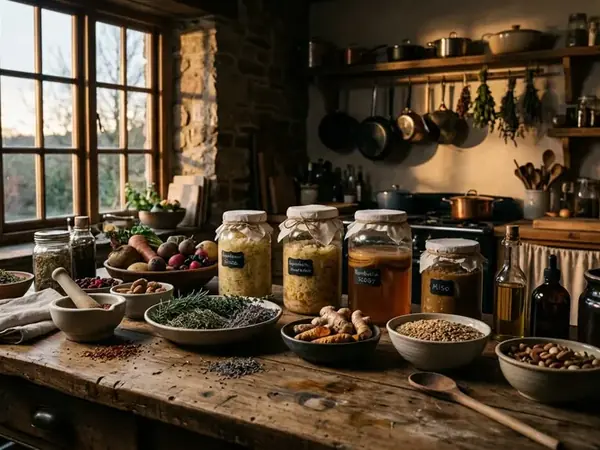
Artisanal vegan cheeses undergo a specific fermentation process. Rejuvelac or specific bacterial cultures create lactic acid that mimics traditional cheese tang. A cultured nut base commonly ferments for 12 to 36 hours at 20 to 24 degrees Celsius before shaping. It should then be refrigerated promptly, while firmer aged styles may mature under controlled refrigeration for several days or longer.
These workshop-oriented pairings serve as baselines rather than absolute sensory rules. People who are highly sensitive to cultured-nut acidity may perceive the same cheese as sharper and prefer a softer, less acidic wine.
Pairings 1 & 2: Soft, Creamy, and Bright
Cashew Camembert and Unoaked Chardonnay
Cashew Camembert pairs best with an unoaked vegan Chardonnay. The bright acidity of the wine cuts through the dense, rich cashew fat without overpowering the delicate bloomy rind. A heavily oaked, buttery Chardonnay can make cashew Camembert taste flatter and more oily rather than providing the intended bright contrast.
Serve unoaked Chardonnay at 9 to 11 degrees Celsius with a 15 to 18 gram wedge of cheese. Remove the cheese from refrigeration 15 to 20 minutes before pouring.
Almond Milk Ricotta and Sauvignon Blanc
Almond milk ricotta finds its match in a crisp Sauvignon Blanc. The herbaceous notes of the wine complement the clean, slightly sweet profile of the almond base. For each 60 grams of almond ricotta, add 1 teaspoon of agave and 1/4 teaspoon of finely grated lemon zest. Serve the Sauvignon Blanc at 7 to 9 degrees Celsius.
Field Note: Drawing on tasting room preparation logs, chilling the Sauvignon Blanc toward the lower end of that range maximizes the crisp contrast against the agave-sweetened ricotta.
Pairings 3 & 4: Aged, Sharp, and Earthy
Aged macadamia nut cheese demands a cool-climate Pinot Noir. Restrained red fruit, forest-floor aromas, and moderate tannin echo the cheese's fermented, mushroom-like notes without overwhelming the palate.
Smoked cashew Gouda-style pairs with Syrah or Shiraz. The bold, dark fruit flavors of the wine work smoothly with the liquid smoke or hickory aging process of the cheese.
Set aged nut cheeses out for 20 minutes before service. A practical serving window is 20 to 25 minutes at a room temperature of 19 to 22 degrees Celsius. Pour Pinot Noir at 14 to 16 degrees Celsius and Syrah or Shiraz at 16 to 18 degrees Celsius, using 45 to 60 milliliter tasting pours.
Pairings 5 & 6: Tangy, Herb-Crusted, and Bold
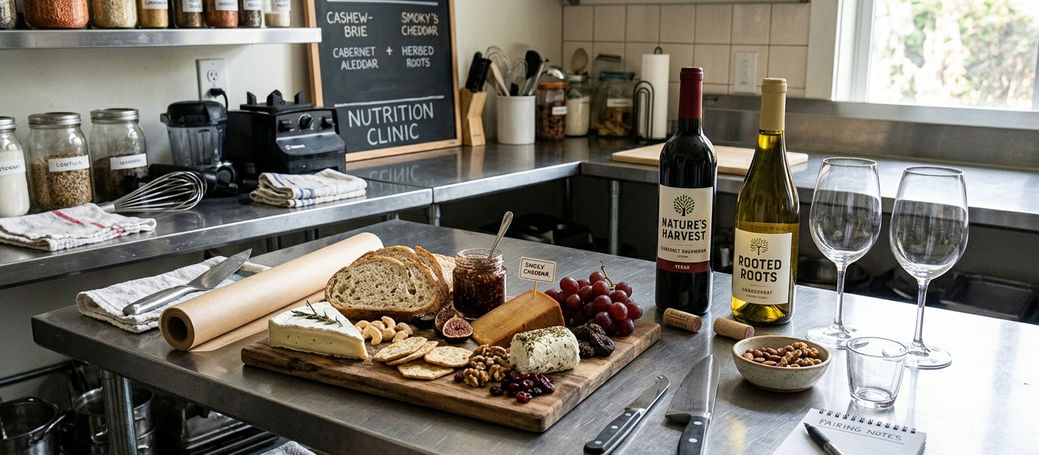
Herb-crusted cashew chèvre requires a dry rosé. The wine's acidity clears the dense cashew texture while restrained strawberry or raspberry notes leave thyme, rosemary, and dill recognizable. Use 1 to 2 teaspoons of chopped mixed herbs per 100 grams of chèvre. Serve the dry rosé at 8 to 10 degrees Celsius.
Vegan blue cheese presents a classic contrast of salty, pungent flavors with the residual sugar of a dessert wine. With a mold-ripened vegan blue, pour 30 to 45 milliliters of late-harvest Riesling or ruby-style Port.
Spirulina-colored blue cheese lacks the mold-derived peppery pungency of a Penicillium-ripened version. The same dessert wine may taste balanced with one and excessively sweet with the other. With a spirulina-colored version, begin with an off-dry Riesling at 7 to 9 degrees Celsius.
Pairing 7: The Deep Umami Experience
The miso-truffle cultured block serves as the board's most concentrated savory pairing. Match it with an earthy Nebbiolo or Barolo. Tannins do not literally bind to umami molecules; they associate primarily with proteins and fats. The high tannin structure of the wine binds perfectly with the intense umami provided by the fermented miso and truffle oil.
Use only 1/4 to 1/2 teaspoon of truffle oil per 100 grams of cultured cheese so the aroma does not cover the wine. Serve Nebbiolo at 16 to 18 degrees Celsius. Open a young, firmly tannic bottle 45 to 75 minutes before the final savory course.
Important: Truffle oil easily dominates a tasting board. Measure precisely to maintain the delicate balance with the Nebbiolo's tannin structure.
Curating Your Tasting Environment
The serving order moves from delicate and acidic to smoked, sweet-salty, and deeply savory. This progression ensures residual smoke, sugar, or truffle does not distort the lighter wines. Palate cleansers reset the sensory experience between courses.
Give each guest 4 to 6 thin green-apple slices, 5 to 7 plain water crackers, 15 to 20 grams of unsalted Marcona almonds, and at least 250 milliliters of still water. Slice apples no more than 15 to 25 minutes before service. Alternatively, hold them briefly in cold water with a small squeeze of lemon and drain thoroughly before plating.
Which of these seven pairings will you pour first to challenge your guests' expectations of plant-based dining?