The Physical Cost of Under-Fueling After Training
An athlete who skips or shortchanges post-exercise nutrition pays the debt during the next day's session. Inadequate carbohydrate intake leaves muscle and liver glycogen stores partially depleted, reducing work output when intensity climbs. At the same time, insufficient dietary protein restricts the intracellular pool of amino acids required to remodel mechanically stressed muscle fibers. Lingering muscle soreness frequently accompanies poor recovery, though soreness alone does not reliably measure either glycogen depletion or myofibrillar remodeling.
Physical exertion places three immediate physiological demands on the body: amino acid substrates for structural repair, glucose to refill exhausted glycogen reservoirs, and endogenous plus dietary compounds to manage exercise-induced oxidative stress. A practical post-training meal supplies approximately 25–40 g of protein paired with a substantial carbohydrate foundation. Hitting daily energy and macronutrient benchmarks governs adaptation far more than racing a minute-by-minute post-workout eating deadline. For regularly exercising adults, clinical nutrition benchmarks place daily protein intake around 1.4–2.0 g per kilogram of body weight. For a 70 kg athlete, that equates to 98–140 g distributed across the day.
Whole plant-based recipes meet these structural and energetic needs simultaneously when prepared with digestion in mind. Exercise-generated reactive oxygen species actively participate in cellular adaptation signaling; the nutritional objective is supporting cellular repair and antioxidant defenses while preserving that adaptive response. Building the plate around cooked starches, steamed legumes, and lightly wilted greens makes a dense recovery meal much easier to chew and tolerate than an equally massive volume of raw vegetables, promoting lasting satiety without heavy digestive load.
Plant Proteins That Drive Structural Muscle Repair
Structuring a post-training plate requires distinguishing between primary protein anchors and nutrient-dense toppings. Soy foods such as edamame and tempeh provide all nine essential amino acids in proportions well-suited for human tissue repair. One cup of cooked, shelled edamame supplies approximately 18 g of protein, while a 100 g portion of tempeh delivers around 18–20 g. Hemp hearts, by contrast, deliver roughly 9–10 g of protein per 3 tablespoons alongside a substantial fat load and a comparatively low concentration of the essential amino acid lysine. Because of this profile, hemp hearts operate best as a culinary topping paired with a legume anchor.
Branched-chain amino acids—particularly leucine—act as metabolic triggers that signal muscle protein synthesis following resistance or endurance training. Sports-nutrition guidelines regarding dietary protein and amino acid requirements for athletes commonly reference roughly 2–3 g of leucine per meal as a practical planning benchmark. Leucine initiates the synthetic cascade, yet complete structural remodeling still requires an adequate supply of every essential amino acid.
Whole Matrices Versus Isolated Powders
Isolated protein powders typically deliver 20–30 g of protein per serving with minimal fat and fiber, though exact macros depend on the specific plant source and product label. Whole legumes and seeds retain their cellular architecture. Cooking makes edamame palatable and improves protein accessibility, while microbial fermentation alters tempeh's food matrix and reduces antinutritional compounds. Both whole foods remain structurally distinct from an extracted isolate. The intact fiber in edamame and the lipid matrix in hemp hearts slow meal transit through the gastrointestinal tract and extend post-meal fullness, providing sustained energy across the afternoon.
Fast and Slow Carbohydrates for Glycogen Replenishment
Carbohydrate urgency depends entirely on the recovery window before the next physical effort. Aggressive refueling protocols call for about 1.0–1.2 g of carbohydrate per kilogram of body weight per hour during the first 4 hours post-exercise—translating to 70–84 g per hour for a 70 kg athlete—though this hourly schedule applies specifically when a second demanding session follows within roughly 8 hours rather than for someone training once a day. For routine daily training, a balanced starch serving within a standard meal suffices.
During exercise, mechanical muscle contractions translocate GLUT4 glucose transporters toward the cell membrane surface. Enhanced post-exercise insulin sensitivity then works in tandem with these transporters to accelerate glucose uptake into the muscle cell, and pairing dietary carbohydrates with plant proteins supports efficient glycogen storage. A 200 g serving of baked sweet potato provides approximately 40 g of carbohydrate, matching the roughly 39 g found in a cup of cooked quinoa. Cooked black rice offers another intact grain option, though its exact carbohydrate density per cup varies with the rice cultivar and cooking water absorption, making package nutrition panels the best reference.
Culinary preparation alters how quickly starches digest. Soft cooking and mechanical breakdown make starch granules more accessible to digestive enzymes, meaning a thoroughly roasted sweet potato and a well-steamed grain both support comfortable digestion without adhering to rigid glycemic categories. Beyond glucose, whole starches supply micronutrients essential for general health. Sweet potatoes provide potassium, while quinoa contributes magnesium. Because sodium represents the primary electrolyte lost in sweat, athletes finishing long, humid sessions must still salt their food thoroughly rather than relying on tubers and grains alone to restore fluid balance.
Polyphenols and Omega-3s That Calm Exercise Inflammation
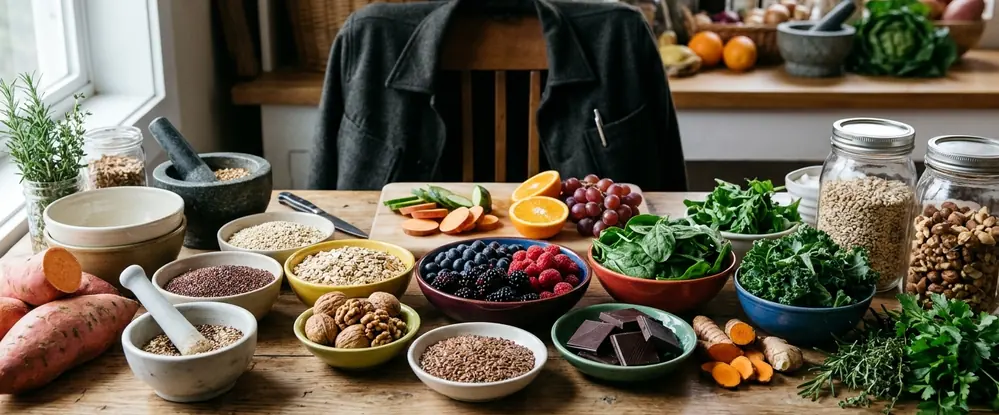
Managing post-exercise inflammation requires separating concentrated clinical interventions from everyday culinary garnishes. Controlled trials investigating Montmorency tart cherry juice or concentrate have administered approximately 30 mL twice daily for several days leading up to and following strenuous exercise, yielding promising results for muscle soreness and functional recovery. Eating a small handful of whole cherries or adding a cup of blueberries (140–150 g) to a meal contributes beneficial dietary anthocyanins, even though whole fruit portions and varying wild or cultivated berry harvests differ from standardized clinical liquid protocols.
A similar distinction applies to anti-inflammatory spices and plant fats. Fresh turmeric root paired with black pepper brings vibrant flavor and culinary polyphenols to plant-based recipes, whereas standardized curcuminoid and piperine capsules tested in clinical settings deliver pharmacological concentrations that a kitchen grater does not replicate. Recovery findings from measured tart cherry preparations cannot be transferred to a pinch of turmeric and pepper in a tahini jar.
Plant Omega-3s and Adaptive Signaling
Seeds and tree nuts supply alpha-linolenic acid (ALA), an essential omega-3 fatty acid. A 28 g serving of walnuts provides close to 2.5 g of ALA, whether left in halves or ground for texture, while 28 g of chia seeds supplies about 5 g. In human metabolism, ALA serves as a biological precursor to long-chain EPA and DHA, though enzymatic conversion remains limited and variable. Including whole food antioxidants and ALA-rich seeds supports the body's natural resolution of exercise stress. High-dose synthetic painkillers can blunt acute inflammatory pathways entirely and interfere with cellular remodeling, whereas whole-food phytonutrients modulate oxidative stress gently enough that long-term training adaptations still proceed.
How to Batch-Prep Your Next Post-Training Recovery Bowl
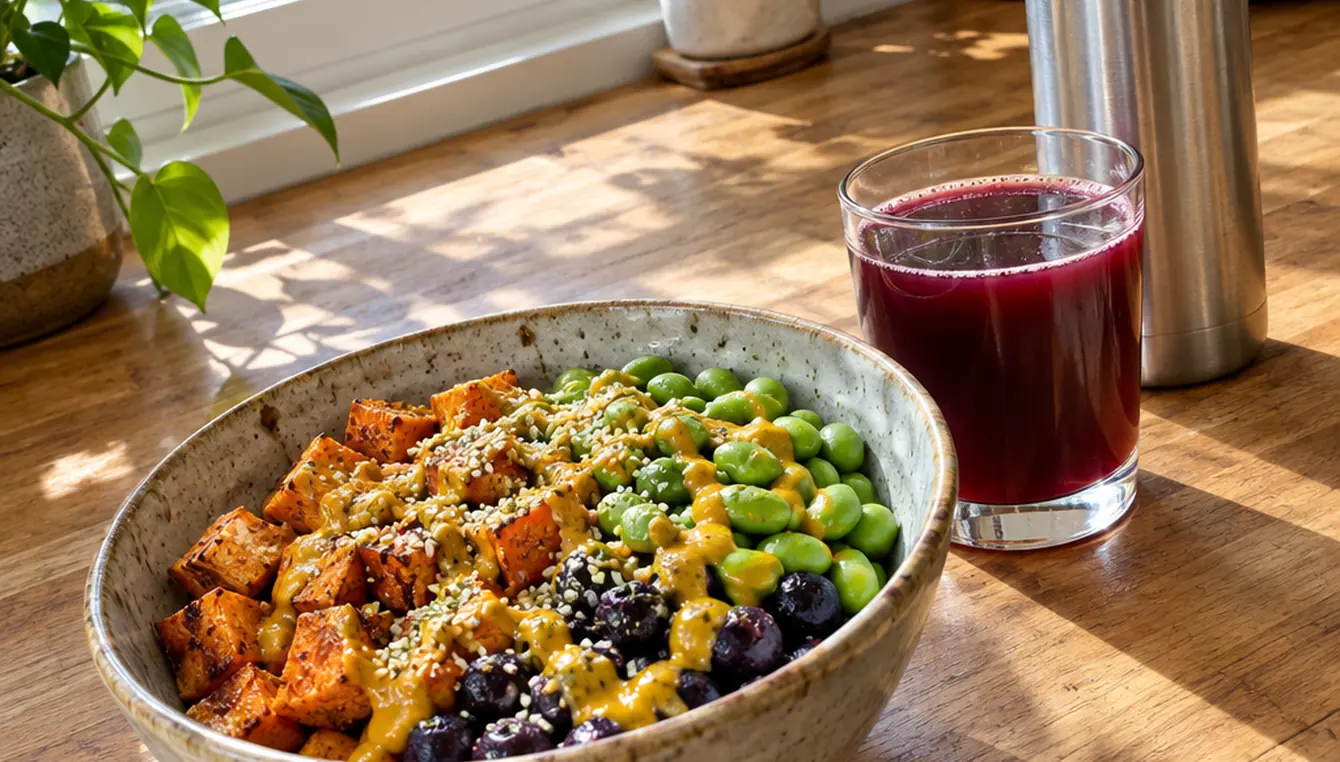
Translating clinical nutrition into an effortless post-workout meal—or scaling the components for active dinner parties—comes down to modular batch preparation. In a well-structured recovery bowl, the edamame supplies the protein anchor, the hemp hearts supplement it, and turmeric-tahini dressing brings fat and flavor without substituting for either protein or sweet-potato carbohydrate.
- Carbohydrate Base: 200 g cooked sweet potato (cubed to 2 cm and roasted in a single layer at 220°C/425°F for 25–35 minutes, turning once, until centers are tender and edges brown).
- Primary Protein Anchor: 1 cup cooked, shelled edamame.
- Amino and Lipid Topping: 2 tablespoons hemp hearts.
- Recovery Greens: 1/2 to 1 cup lightly steamed spinach (1–2 minutes) or finely sliced kale (3–5 minutes).
- Turmeric-Tahini Dressing (yields 2 portions): 2 tablespoons tahini, 2 tablespoons lemon juice, 1 teaspoon finely grated fresh turmeric, a pinch of black pepper, and 2–4 tablespoons water whisked in gradually to smooth out the initial stiffening of the sesame paste.
Combining these exact portions with one tablespoon of the tahini dressing yields approximately 30 g of plant protein alongside roughly 40 g of complex carbohydrate from the sweet potato. Lightly steaming the kale or spinach reduces leaf volume and softens fibrous stems, allowing you to eat a larger portion comfortably while improving the digestive accessibility of fat-soluble carotenoids paired with the sesame fats in the tahini. Once cooked, refrigerate the sweet potatoes, edamame, and greens within 2 hours and consume them within 3–4 days; having the components chilled cuts physical bowl assembly to under 3 minutes, plus brief appliance time if you prefer the base reheated.
Before you head out for your next workout, roast one sheet pan of 2 cm sweet potato cubes and whisk a jar of the turmeric-tahini dressing, then slide the cooled potatoes into the refrigerator so your recovery bowl is ready to assemble the moment you walk back through the door.