Table of Contents
- A Clear Golden Bowl on a Cold Night
- Glutamic Acid and the Brothy Taste
- Toasted Crusts on Potatoes and Carrots
- Late Whisking for Vegetable Stocks
- Cheddar Bite in Biscuits and Focaccia
- Oil, Dust, and Textured Surfaces
- Grown on Molasses, Stopped by Heat
A Clear Golden Bowl on a Cold Night
The host sets out shallow bowls while the windows fog. Onion has already browned in the pot. Sliced mushrooms and garlic followed, then water, then a long quiet simmer. The liquid is strained so each bowl stays light, closer to consommé than stew.
Guests taste a clear golden broth and assume bones. Someone asks how long the chicken simmered.
The last ingredient is nutritional yeast. Two or three tablespoons, whisked in just before the ladle.
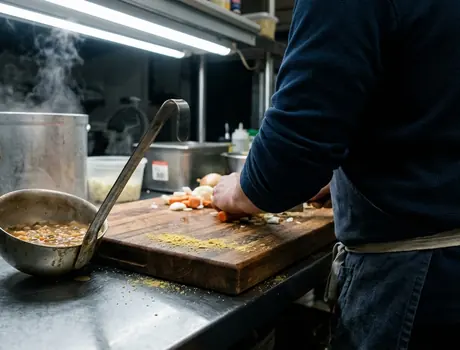
The quantities are modest and worth measuring. For 4 cups of strained vegetable broth, start with 2 tablespoons of the flakes. Taste. Add a third tablespoon only if the broth still seems thin in flavor. The flakes go into a ladle first. Whisk them with 1/2 cup of hot broth for 20 to 30 seconds, return that slurry to the pot, and heat for 2 to 4 minutes. The slurry step disperses the flakes so dry islands never sit on the surface.
That winter-table move belongs to a wider kitchen habit: finish a plant pot with glutamates after the aromatics have already done their work. Browned allium and mushroom built the base. The flakes supply the brothy backbone guests keep attributing to stock. Timing and dispersion do more than a longer simmer would.
Keep the slurry-first map in mind whenever the liquid is already strained and hot. Dry flakes dumped straight into a full pot clump. A ladle of broth solves that in under a minute.
Glutamic Acid and the Brothy Taste
Treat nutritional yeast as a seasoning first. Its useful culinary contribution comes from savory compounds, especially glutamic acid and glutamates.
When those compounds reach umami-sensitive receptors on the tongue, they reinforce the perception of brothiness. Vegetable, grain, and legume dishes taste more complete. Salt seasons. These flakes add the round, stock-like middle that salt never supplies on its own.
A practical tasting test keeps the dose honest. Add nutritional yeast in 1-teaspoon increments to 2 cups of soup, stirring for 15 to 20 seconds and tasting after each addition. The soup will tell you when the savory edge has arrived. Stop there. Extra flakes push the flavor toward toast and bitterness rather than toward more broth.
Cooks chasing plant-based depth reach for these flakes because the tongue already knows glutamates as the signal of a finished pot.
Vitamin content comes second. B-vitamins ride along as a secondary benefit to the primary role as a flavor enhancer. Check the package nutrition panel for vitamin B12 rather than assuming it is present. Unfortified and fortified flakes can look nearly identical on the shelf. Even with the USDA FoodData Central nutritional profile records at hand, label reading still beats guessing which carton carries B12.
This seasoning suits anyone building vegetable soups, grain bowls, and legume stews who wants a complete savory line without a bone pot on the stove. It also suits anyone comparing fortified and unfortified cartons side by side, because the flakes themselves will not announce the difference.
Toasted Crusts on Potatoes and Carrots
The common roast is oil, salt, and a hot sheet pan. The better crust starts the same way, then adds the flakes only after the oil has coated every cut face.
Oil goes on first because it creates the adhesive layer that keeps dry flakes from collecting on the pan. Nutritional yeast and salt follow. Spread the vegetables with cut faces against the metal to encourage browning. Moderate-high oven heat toasts the coating while the interior softens. The dry heat deepens the nutty flavor of the flakes when the temperature stays in range.
For 1 1/2 pounds of 3/4-inch potato or carrot pieces, use 2 tablespoons of olive oil and 2 to 3 tablespoons of nutritional yeast. Roast at 415 to 425 degrees Fahrenheit for 28 to 38 minutes, turning once after about 17 to 20 minutes. The oil-first map is the whole method. Skip it and the flakes drift, scorch on bare metal, and leave the vegetables unevenly seasoned.
Broccoli and cauliflower ask for a different treatment. Steam or char them first. Drain steamed florets for 45 to 60 seconds, then toss while hot. For 4 cups of steamed broccoli or cauliflower, use 1 to 2 teaspoons of oil and 1 tablespoon of nutritional yeast. Residual moisture helps the flakes cling. The finish reads cheese-like because the glutamates sit on a hot, slightly wet surface rather than baking into a crust.
Bitter Patch Alert
Keep heavily coated vegetables below 435 degrees Fahrenheit and inspect exposed flakes during the final 5 to 8 minutes. Dark brown patches can taste bitter before the vegetables themselves appear burned.
Compare the two paths. Cubed roots want oil, a sheet pan, and enough time for the coating to toast. Tender brassicas want a brief drain, a little fat, and an immediate toss. Same flakes. Different heat, different adhesion, different finish.
Late Whisking for Vegetable Stocks
Clear vegetable stock and a blender soup ask for the same ingredient on opposite schedules of thickness. Both still want the flakes late.
In clear stock, mix the flakes with a small amount of liquid first. Gradual dilution produces a smoother suspension. Add the mixture near the end, when the stock has already been reduced and its salt level can be judged accurately. Use 1 to 3 tablespoons of nutritional yeast per 4 cups of stock, whisked first with 1/2 cup of hot liquid. Hold the finished broth at a gentle simmer for 3 to 5 minutes rather than maintaining a hard boil. The mouthfeel starts to mimic poultry broth once the flakes hydrate and the glutamates spread through the pot.
Pureed squash or potato-leek soup takes the flakes after the vegetables are already tender. Blend them in so the savory edge can counter the sweetness of the puree. For 6 cups of butternut squash or potato-leek soup, blend in 3 tablespoons, wait 2 minutes for the flakes to hydrate, then reassess salt and acidity. Sweet soups often need a squeeze of acid after the yeast, because the new savory line makes leftover sugar taste louder.
End-of-Pot Whisk
Whisk nutritional yeast toward the end of cooking. Late addition preserves its delicate vitamin profile and keeps the flakes from clumping in a long boil.
If a soup will be reheated, cool it within 2 hours, refrigerate it, and whisk during reheating. Suspended yeast solids can settle. The slurry-first habit still applies the next day: a brief whisk brings the broth back to an even gold.
Cheddar Bite in Biscuits and Focaccia
Biscuit dough and focaccia dough place the same flakes on opposite sides of a role boundary. One formula wants them in the dry mix. The other wants them in a brush of oil on top. Neither loaf will rise because of them.
In drop biscuits or scones, whisk nutritional yeast into the flour before the fat and liquid are introduced. That dry-mix-first step distributes the flakes throughout the crumb and lets them absorb a small amount of moisture alongside the flour. For a biscuit or scone formula containing 2 cups of flour, add 1/4 to 1/3 cup of nutritional yeast and retain the recipe's usual baking powder or baking soda. The bite reads sharp and cheddar-like once the crumb sets.
If the mixed biscuit dough remains crumbly after 20 to 30 seconds of folding, add milk or plant milk 1 tablespoon at a time, stopping after 1 to 3 tablespoons. The flakes drink a little extra liquid. The dough should just come together.
On focaccia, mix the flakes with oil and coarse salt immediately before brushing so they remain suspended long enough to spread across the dough. For one 9-by-13-inch focaccia, combine 2 tablespoons of olive oil, 1 1/2 tablespoons of nutritional yeast, and 1/4 to 1/2 teaspoon of coarse salt. Brush it on during the final 10 to 15 minutes of proofing. The surface bakes into a savory film while the crumb stays the baker's yeast's job.
Heat-deactivated nutritional yeast cannot leaven dough, so yeast-raised focaccia still needs active baker's yeast and quick breads still need their specified chemical leavener. That is the golden-broth-to-risen-focaccia role boundary in one line: these flakes season, they never lift.
Flour and fat do the rest. The flakes absorb moisture, ride the fat, and send flavor through the crumb instead of sitting in streaks. Keep the amount modest on focaccia so the brush stays fluid. Keep it higher in biscuits so the cheddar note reaches the center.
Oil, Dust, and Textured Surfaces
Finishing methods begin with fat because dry nutritional yeast adheres poorly to bare popcorn, pasta, or raw kale.
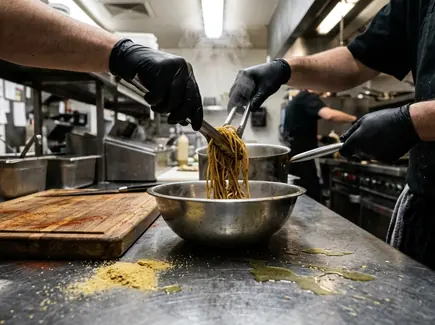
Freshly popped kernels get oil before any seasoning. For 8 cups of hot popcorn, toss first with 1 to 2 tablespoons of oil, then add 2 to 3 tablespoons of nutritional yeast, 1/4 teaspoon of fine salt, and 1/8 to 1/4 teaspoon of smoked paprika. The classic bowl works because hot fat grabs the flakes and paprika in one shake. Stovetop popcorn still warm from the pan holds more than popcorn that has cooled on a counter.
Oil-based pasta carries enough fat to catch a light dusting at the table. Aglio e olio is the model. For 12 ounces of cooked oil-based pasta, begin with 2 tablespoons of nutritional yeast and up to 1/2 cup of reserved pasta water. Toss for 30 to 45 seconds so the flakes join the oil-water emulsion. The starch in that water helps the seasoning coat each strand instead of falling to the plate.
Kale needs a massage before the flakes. For one bunch of stemmed kale, massage with 1 tablespoon of lemon juice, 1 tablespoon of olive oil, and a pinch of salt for 60 to 90 seconds, then work in 1 to 2 tablespoons of nutritional yeast. Lemon and oil soften the leaves and leave a thin coating. The flakes cling. The salad tastes seasoned rather than dusty.
Fat Holds Flakes
Nutritional yeast clings to fats such as olive oil or tahini. That makes it a dry seasoning for any textured surface already carrying a thin film of oil.
Read the three maps together. Slurry-first for hot strained liquids. Oil-first for roasted roots, popcorn, pasta, and kale. Dry-mix-first for biscuits and scones. The flakes stay the same. Placement decides whether they taste like broth, crust, crumb, or dust.
Grown on Molasses, Stopped by Heat
The ingredient's behavior makes sense once its production is traced. A selected strain of Saccharomyces cerevisiae is cultivated using a sugar-rich medium commonly based on cane or beet molasses. After sufficient growth, the yeast is harvested and washed. Controlled heating pasteurizes and deactivates the cells, after which the material is dried into flakes or powder.
Commercial production separates cultivation, harvesting, heat deactivation, drying, and flaking into distinct stages. The kitchen receives an organism grown for this use, then stopped. That sequence explains the cheddar bite in a biscuit that never fermented, the brothiness in a pot that never saw bones, and the way a dry spoonful sits inert until fat or hot liquid wakes the glutamates.
Store the dry flakes in a tightly closed container away from steam and use a dry spoon. Repeated moisture exposure encourages clumping. Clumped flakes still season, but they fight the slurry, the toss, and the dry mix.
Every carton on the shelf holds the same thing: Saccharomyces cerevisiae grown on beet or cane molasses and then killed by heat before drying. Live baker's yeast raises the focaccia; this yeast, already stopped, only seasons the crust.