Table of Contents
- Small Plates That Arrive in Waves
- Olives, Almonds, and the Pulse Finish
- A Timed Ladder From Cold to Stew
- Tomato Toast Guests Build Themselves
- Fullness Signals Across a Long Table
Small Plates That Arrive in Waves
Tapas is a style of Spanish dining built on succession, where small plates arrive in timed waves rather than all at once.
Serve one or two small dishes, let people taste and talk, then clear or replenish before the next arrival.
Megan, a Sculpt360 instructor, used that framework with six guests after an evening class at SculptDC. She planned 6-8 savory dishes for a 90-120-minute meal. Most plates held 2-4 bites per guest. Food sat on 2-3 shared platters at a time.
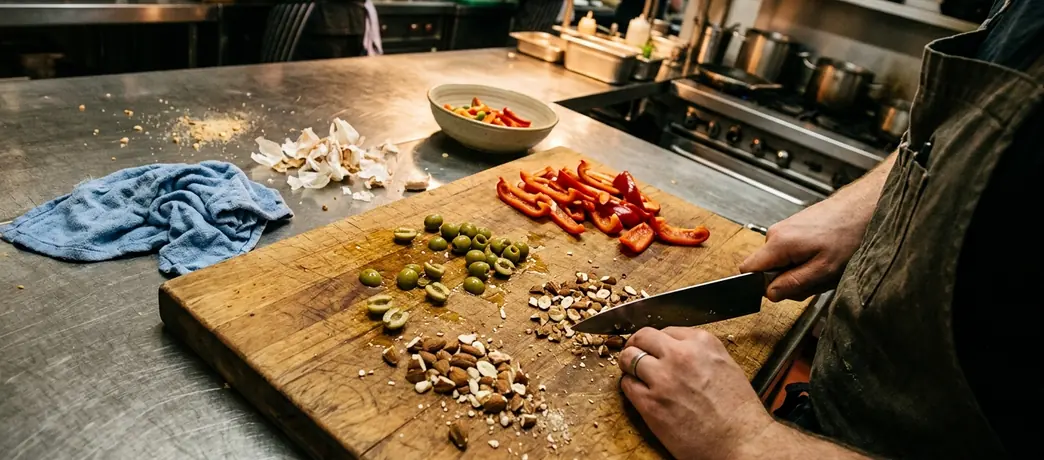
Plant-based cooking slots into this format with little strain. Vegetables, pulses, nuts, bread, olives, and preserved produce already define much of the Spanish pantry. Each wave can carry a different texture and a different nutritional job. Culinary enjoyment stayed in front. Nutritional education rode along as a quiet second track, the way WhyFoodWorks publishes a gathering: as something people do with their hands, then discuss.
One guest who operates Manicures N Motion had a morning of appointments. She needed the meal paced so she could leave satisfied without a late, heavy finish.
Two-Platter Ceiling
Keep 2-3 platters on the table. Bring the next plate only after talk has settled around the last one.
Olives, Almonds, and the Pulse Finish
Olives and Marcona almonds open the night because their richness comes largely from monounsaturated fat. That fat takes the edge off hunger while people are still standing around the first platter. A practical tasting portion is 5-8 olives or 20-25 grams of Marcona almonds. The almond portion supplies roughly 4-5 grams of protein and about 8-10 grams of monounsaturated fat, with variation from roasting oil and cultivar.
Used at the start, those fats support cardiovascular patterns when they stand in for heavier saturated sources.
That opening plate suits anyone who arrives hungry from a class or a commute and still wants to stay at the table for the full 90-120 minutes.
Chickpeas and lentils earn a later slot. They supply protein and fermentable carbohydrate, which gives the meal substance after the lighter waves. Roughly one-half cup of cooked chickpeas or lentils generally contributes about 7-9 grams of protein and 6-8 grams of fiber. Pairing that serving with bread or potatoes broadens the amino-acid mix and the carbohydrate supply. A closer look at dietary fiber and plant-based protein helps explain why pulses close a plant-based spread so effectively.
Sustained energy comes from the sequence. Guests who train at SculptDC, or who stand through a full day of client work, tend to need that later plate more than another round of olives.
A Timed Ladder From Cold to Stew
Kitchen pressure sets the order as much as flavor. Marinated olives, roasted peppers, and spiced nuts go first because they can be portioned before anyone arrives. Pan con tomate follows while attention is still high enough for participation. Patatas bravas and garlic mushrooms come next, in separate waves, so the host never fries potatoes and manages a hot mushroom pan at the same time. A warm chickpea and spinach stew closes the savory courses.
Cold Work Before the Door Opens
Finish cold preparations 2-4 hours before arrival. Toast nuts 45-90 minutes ahead and hold them uncovered until cool so trapped steam does not soften them.
The clock for around six guests runs as follows.
- Olives and nuts at minute 0
- Pan con tomate at minutes 15-25
- Patatas bravas at minutes 35-45
- Garlic mushrooms at minutes 55-65
- Chickpea-spinach stew at minutes 75-90
Those arrivals sit 12-18 minutes apart, which keeps conversation intact.
The Hot Pan Split
Patatas bravas need a two-stage potato method.
- Parboil close to 3-centimeter potato pieces for 7-9 minutes.
- Drain them for 10-15 minutes.
- Roast at roughly 220°C until browned.
Cook mushrooms in batches no deeper than one layer so they sear rather than steam.
Drawing on the service notes from Megan's casual six-guest evening, the ladder held because the two hot pans never overlapped.
Olives and nuts at arrival, guest-built tomato toast second, two separately managed hot pans, then a pulse-based closing plate.
Tomato Toast Guests Build Themselves
Nutrition talk in lecture form flattens a tapas night. Attach the insight to the work of eating. When each new plate arrives, add one spoken ingredient comment of no more than 20-30 seconds. Guests then compare tasting notes and textures without being asked to sit through a lesson.
The Grater Line
The interactive task belongs to pan con tomate because it is quick, sensory, and forgiving. People can compare how garlic pressure, tomato pulp, olive oil, and salt alter the same piece of toast.
Set halved ripe tomatoes beside box graters over shallow bowls. Each person rubs a cut garlic clove lightly across warm sourdough before spooning on tomato.
For a casual visit with 6 guests, provide 3 large ripe tomatoes, 2 cut garlic cloves, 12-18 small sourdough slices, 2 graters, and one shallow bowl beneath each grater. Toast the bread 5-10 minutes before the station opens. Allot 10-15 minutes for assembly.
Megan placed the station at the far end of the table so traffic never crossed the hot pans. The station works for guests who like to compare textures; the host-prepared pulp option covers everyone else.
Who Handles the Knife
A shared grating station needs individual utensils or host-prepared tomato pulp when guests have celiac disease, garlic sensitivity, impaired hand control, or concerns about cross-contact.
Fullness Signals Across a Long Table
Success shows up in physical cues: guests noticing hunger ease before the chickpea course. The 12-18-minute gaps between waves create those checkpoints.
Fat and protein entering the small intestine stimulate release of cholecystokinin, or CCK. That hormone participates in digestive activity and communicates fullness. Keep the full savory service within 90-120 minutes.
Ladle Check First
Before serving the final stew, pause for 3-5 minutes to clear plates and let guests assess whether they want a small ladleful or a full portion.
When the stew lands at minutes 75-90, the earlier olives, almonds, bread, potatoes, and mushrooms have already given fat, starch, and some protein time to move. Because cholecystokinin requires about 20 minutes to reach the brain and signal satiety, spacing the plates ensures guests physically register the first wave of food before the final course arrives.