The Math Behind Carbohydrate Portions
Evaluating a plant-based meal begins with the carbohydrate in the portion actually eaten. Many dietary models focus exclusively on how quickly a specific food raises blood glucose, a metric known as the glycemic index. Relying solely on this index provides an incomplete picture of metabolic response. Glycemic load combines the speed of absorption with the actual quantity of carbohydrates consumed, offering a calculation for meal planning.
Glycemic load is calculated by multiplying a food's glycemic index by the grams of available carbohydrate in a serving, then dividing that number by 100. Available carbohydrate specifically excludes fiber, focusing the equation on the starches and sugars that enter the bloodstream. On the conventional single-food scale, a glycemic load of 10 or less is considered low, while a score of 20 or more is high. This relationship means that changing a serving's size changes its glycemic load, even when its glycemic index remains the same.
A serving's size and its intact physical structure affect the metabolic outcome of a vegan meal. Consuming a large portion of a low-glycemic food can deliver a higher total glycemic load than a very small portion of a high-glycemic food. Managing blood sugar effectively requires considering these variables together. Plant-based nutrition provides structural components, particularly cellular walls and fibrous matrices, that alter how carbohydrates are processed.
Viscosity and the Enzymatic Breakdown of Starches
Dietary fibers are categorized by their physical behavior after water is added during digestion. Insoluble fiber contributes physical bulk to the digestive tract, moving food through the system. Viscous soluble fiber performs a different mechanical function by thickening the contents of the stomach and intestines. That resulting viscosity makes starch physically less accessible to digestive enzymes.
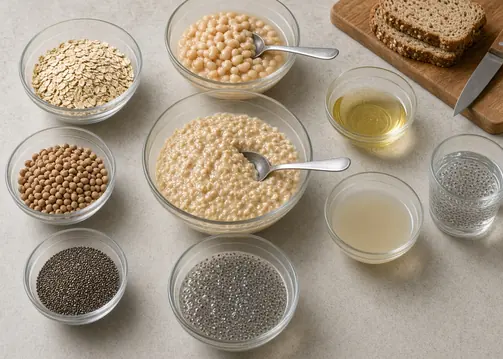
Specific plant foods deliver viscous fibers. Oats supply beta-glucan, beans provide soluble fibers, and chia seeds form a thick gel when hydrated. Incorporating these ingredients adds viscosity to a carbohydrate-containing meal. The clinical mechanism of soluble fiber relies on this physical barrier. Digestive enzymes must work through the viscous gel to reach the starches, which slows the subsequent glucose absorption into the bloodstream.
This delayed enzymatic breakdown generally produces a gentler post-meal rise and less abrupt insulin demand. Assessing this effect requires looking at the complete digestive timeline. Comparing the same breakfast at roughly 1 and 2 hours after the first bite yields more informative data about its glucose pattern than simply labeling an ingredient 'high-fiber' without considering the serving size or the specific type of fiber present. The physical state of the food in the digestive tract governs the speed of energy delivery.
Flattening the Absorption Curve with Fat and Protein
Constructing a metabolically stable plate involves building around the starch portion and then adding a substantial protein source alongside unsaturated fat. A standard approach might feature rice with tofu and avocado, or pasta combined with lentils and walnuts. The presence of dietary protein and fat slows gastric emptying, the process by which the stomach releases food into the small intestine.
Slowing gastric emptying spreads carbohydrate absorption over a longer period. A practical comparison illustrates this shift: consuming 1 cup of cooked rice alone yields a rapid glucose delivery. Modifying that meal to 1/2 cup of cooked rice served with about 1/2 cup of lentils, non-starchy vegetables, and 1 tablespoon of hemp seeds changes both the carbohydrate quantity and the meal's composition. The rice reduction changes the absolute carbohydrate quantity, while the other additions change the meal's structural composition.
Glucose readings taken over 2 to 3 hours after a meal can show why a paired meal should not be judged solely by an early reading. A flatter initial rise is frequently followed by a later, sustained rise as the delayed carbohydrates enter the system. The goal is a less abrupt rise and steadier energy throughout the afternoon.
Establishing Metabolic Boundaries
Pairing can flatten and extend glucose absorption, but it does not erase the meal's total carbohydrate load or replace individualized medication guidance. Avocado beside rice may move the glucose peak later; it does not make the rice's carbohydrate disappear.
Sequencing Ingredients to Delay Glucose Delivery
Translating these physiological mechanisms into daily culinary practice requires adjusting both the composition and the timing of a meal. For a standard rice or pasta dinner, the first step is adjusting the portion of the starch itself. The second step is adding structural interference through vegetables and a dense plant protein such as tofu or lentils. A plate might use 1/2 cup of cooked white rice, 1 cup of non-starchy vegetables, and about 1/2 cup of tofu or lentils, rather than making a larger serving of rice the center of the meal.
Food sequencing uses the digestive system's timeline to soften the early glucose rise. This means eating the vegetables and protein first, then beginning the rice or pasta roughly 10 to 15 minutes later. This delay gives the protein and fiber time to reach the stomach and begin slowing the gastric emptying process before the starches arrive.
The rice dinner changes through three separate levers—less rice changes carbohydrate grams, lentils and vegetables change meal structure, and eating those additions first changes the order of glucose delivery. Culinary additions can also play a minor role in this process. A lemon or vinegar dressing is a reasonable flavor choice for the vegetable portion. Acidic dressings may modestly affect starch digestion and gastric emptying, though acid in the stomach already suppresses salivary starch-digesting enzyme activity, making the vinegar's effect less predictable than the portion and sequencing changes.
Retrogradation and the Structural Shift of Cooled Starches
The physical preparation of starchy foods alters their molecular structure and their subsequent glycemic impact. When starchy foods like potatoes or rice are cooked in water, the starch molecules swell and become highly accessible to human digestion. This swelling is what makes freshly cooked starches rapidly absorbable in the small intestine.
During cooling, some of the starch chains realign into tighter, more organized structures. This process, called retrogradation, converts a portion of the digestible carbohydrates into resistant starch. Resistant starch escapes digestion in the small intestine, passing through to the colon instead of entering the bloodstream as glucose.
For rice, the cooked grains should be spread in a shallow container, refrigerated promptly, and allowed 12 to 24 hours of cooling before being used in a cold dish. The rice must be kept refrigerated during storage, and these refrigerated leftovers should be used promptly to maintain food safety.
Cooling converts only part of the starch, not the entire serving. After 12 to 24 hours of refrigeration, some of the rice's starch resists digestion in the small intestine; most of the serving remains digestible.