A DIY plant-based sushi rolling station is a curated, self-serve culinary setup where guests assemble their own maki and temaki using pre-prepped ingredients and specialized tools. Treat it as an assembly system rather than a buffet. Rice supplies adhesion. Nori supplies structure. Prepared vegetables and plant proteins supply contrasting textures. Mats and hand water make the mechanics workable for people who have never rolled sushi before.
The functional purpose is simple: shift the labor of assembly from the host to the guests while giving everyone a hands-on dining experience. For six guests, plan three to four rolls per person if sushi is the main meal, or one to two rolls if it accompanies other dishes. A practical station offers six to eight fillings—two crunchy, two rich or creamy, two umami-forward, and one to two acidic or spicy choices.
Core components stay consistent across scales. You need a central starch foundation, a spectrum of raw and cooked plant-based fillings, structural wrappers, and ergonomic rolling tools. Everything else is refinement.
Defining the Interactive Sushi Station
Hosts often default to plated sushi because it looks controlled. An interactive station trades that control for pace and conversation. Guests choose combinations, ask each other what works, and eat while the rice is still at a pleasant temperature.
The station works when every component has a job. Short-grain rice binds the roll. Nori holds shape. Fillings create contrast so each bite does not taste the same. Tools—bamboo mats, boards, damp cloths, tezu, keep the process clean enough that beginners finish a roll instead of abandoning it halfway.
Station Reality Check
Rice demand shifts with the rest of the menu. Five hundred grams of dry rice suits six main-course diners; the same quantity can sit unused when soup, edamame, salads, or other substantial dishes share the table.
Preparing the Sushi Rice Foundation
Japanese short-grain rice earns its place through chemistry. Its relatively low amylose and high amylopectin profile produces cohesive grains that spread and roll without collapsing into paste. Long-grain varieties lack that stick and fight the mat.
For six guests, start with 500 grams dry rice. Rinse through four to six changes of cool water until the water runs mostly clear. Soak twenty to thirty minutes, drain ten minutes, cook, then rest covered another ten minutes. Washing removes excess surface starch that would otherwise turn the finished rice gummy.
Seasoning comes next. A workable starting point for 500 grams dry rice is 75 milliliters unseasoned rice vinegar, 30 grams sugar, and 8 grams fine salt. Warm the mixture only until the solids dissolve; do not boil away the vinegar. Spread the hot rice in a wooden hangiri, fold in the seasoning over two to three minutes, and fan ten to fifteen minutes until the rice cools near 35 to 40 degrees Celsius. The surface should look glossy, not wet.
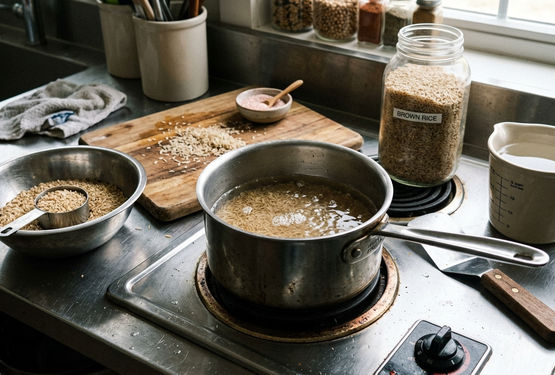
For room-temperature service that extends beyond immediate preparation, verify an equilibrium pH below 4.6 with a calibrated food pH meter after the seasoning has dispersed. A recipe ratio alone does not establish the final pH. Food-safety guidance on proper acidification (pH below 4.6) treats verified acidity as the control point. If the rice has not been uniformly acidified and checked, handle it as a time-controlled cooked food rather than assuming vinegar makes multi-hour display safe.
Curating the Plant-Based Fillings
Select fillings by function rather than by how many ingredients you can fit on the table. Crunch, creaminess, umami, and acidity keep rolls balanced when guests build freely.
Crunch and structure
Cucumber, carrot, and daikon create fracture in each bite. Cut firm vegetables into matchsticks approximately 5 to 6 millimeters thick and 8 to 10 centimeters long so they roll evenly. For six guests, prepare roughly 100 to 130 grams of each selected filling.
Creaminess and richness
Ripe avocado softens the bite. Slice it ten to fifteen minutes before guests begin rolling so it stays green without turning watery on the board. Sweet potato tempura or roasted butternut squash adds warmth; prepare tempura within twenty to thirty minutes of service and hold it uncovered on a rack so trapped steam does not soften the coating.
Umami-forward proteins
Pressed tofu strips bake at 200 degrees Celsius for twenty to twenty-five minutes after a fifteen- to thirty-minute marinade. Cool them and blot loose sauce before they reach the station. Cook sliced shiitake until their released liquid evaporates, then add glaze during the final two to three minutes so the mushrooms coat rather than weep. Tempeh follows the same logic: dry surface, concentrated flavor.
A roll packed with wet glazed mushrooms, freshly salted cucumber, and avocado can soften or tear the nori even when technique is sound. Drain the mushrooms, blot the cucumber, and assemble promptly.
Setting Up the Rolling Station
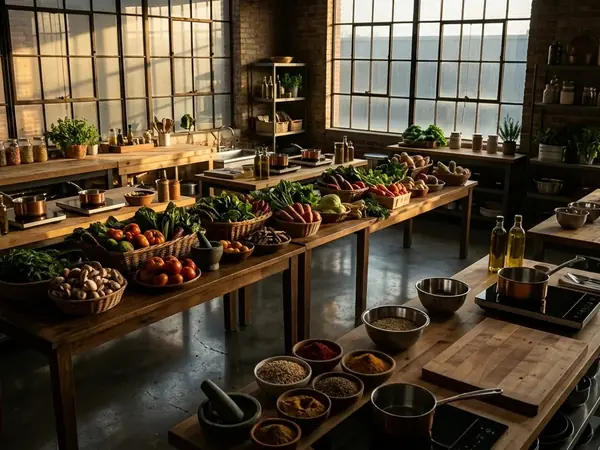
Place the communal rice bowl in the center because every roll requires it. Radiate fillings outward in a shallow arc of small bowls so guests reach ingredients without passing dishes over cutting boards.
Give each person a defined rolling zone at least 45 centimeters wide and 35 centimeters deep. For more than six guests, duplicate the rice and filling sets at opposite ends of the table to avoid a single bottleneck. Each place setting needs one 24-by-24-centimeter bamboo mat (makisu), one cutting board, one damp cloth, and one small tezu bowl.
Tezu—hand water, keeps rice off fingertips. Mix roughly 15 milliliters rice vinegar per 240 milliliters water. Guests should dampen fingertips lightly rather than immerse their hands; excess water pastes the rice surface. Keep nori in its resealable package or a lidded dry container until thirty to sixty seconds before use, and position the sheets at least 30 centimeters from the rice bowl, tezu, and any steaming filling.
Mat Side Note
Wrap each bamboo mat in plastic film before service. Cleanup shrinks to a peel-and-toss step, and rice grains stop lodging between the slats.
Sauces and Flavor Accents
Use sauces as adjustable finishing tools instead of loading heavy dressings onto shared fillings. Tamari or soy sauce supplies salinity. A house-made spicy vegan mayonnaise carries chile heat and fat-soluble aromas. Pickled ginger resets the palate between rolls. Wasabi adds sharp heat in small amounts.
For six guests, set out 180 to 240 milliliters tamari or soy sauce and 120 to 180 milliliters spicy vegan mayonnaise in several small bowls rather than one shared vessel. For a soy-milk mayonnaise, begin with 60 milliliters unsweetened soy milk and 120 milliliters neutral oil, then blend in 10 to 15 milliliters rice vinegar, chile sauce, and salt to taste. Chill until service.
Provide 60 to 90 grams pickled ginger, 15 to 25 grams prepared wasabi, and 30 to 45 grams toasted black and white sesame seeds. Crispy fried onions and microgreens work as textural garnishes inside or outside the rolls. Refill those fragile items in small batches every thirty to forty-five minutes so steam, sauce splashes, and repeated handling do not flatten them.
Guiding Your Guests Through the Process
Demonstrate one complete roll before opening the station. Keep the walkthrough to three to five minutes, then step back.
- Place a nori sheet rough-side up on the mat.
- Spread approximately 90 to 110 grams cooked rice with damp fingertips, leaving a 2-centimeter rice-free edge at the far side for sealing.
- Align a restrained strip of fillings—about 30 to 45 grams total across no more than three primary strips.
- Lift with the mat, make the first tuck firmly, then finish with two to three light compressions rather than crushing the roll continuously.
- Rest the finished roll seam-side down for thirty to sixty seconds, then cut into six or eight pieces with a sharp damp knife, wiping the blade after every one or two cuts.
The common beginner mistake is overfilling. Extra avocado or a fourth strip of vegetables looks generous and then bursts the nori. Less holds together.
After the demo, the station runs itself. Guests copy the motion, adjust fillings to taste, and learn faster from their own second roll than from extended instruction.
Will you stick to traditional cucumber and avocado pairings, or will you challenge your guests with complex flavor combinations like marinated shiitake and spicy mango?