Why Is Plant-Based Meal Prep Essential for Fast Meals?
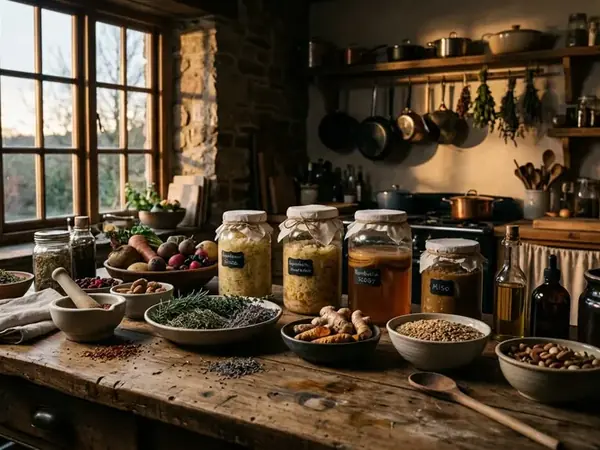
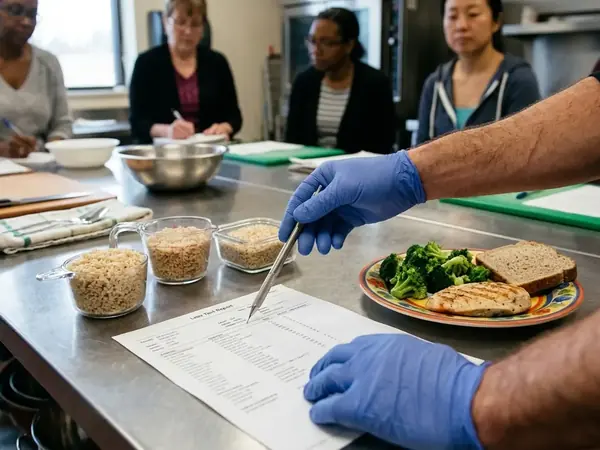
The most effective way to build a sustainable eating habit is to remove the very first food decision of the day. During a foundational workshop in early 2016, the teaching model centered entirely on repeatable mise en place. Participants didn't start by mapping out complex weekly dinners. They started with breakfast.
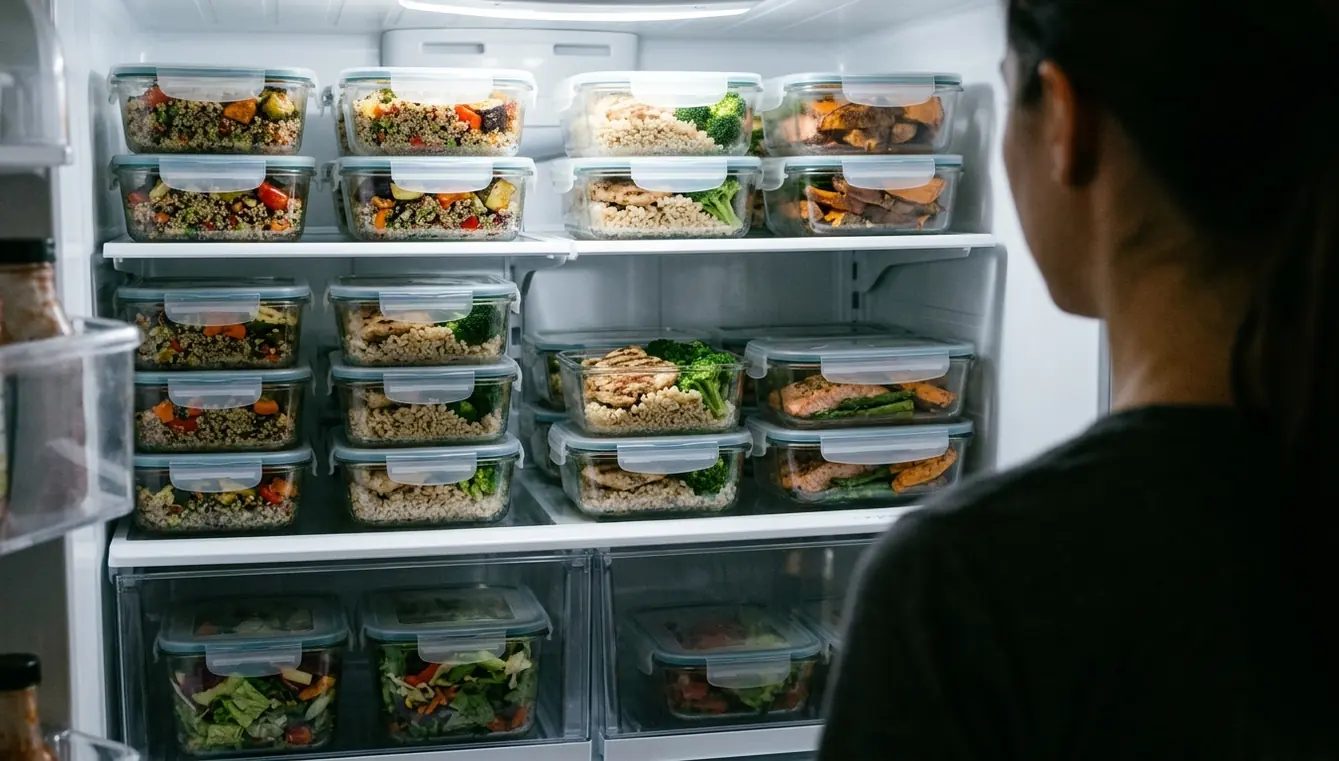
A practical first batch consists of four to five breakfast jars. This provides enough food for a standard Monday-through-Friday workweek without requiring weekend leftovers to stretch too far. A realistic beginner prep session takes 45 to 75 minutes. That window includes measuring dry ingredients, mixing plant-based milk, labeling jars, and wiping down the station.
The workflow is simple—dry goods first, liquids second, and toppings last or held separately. Once assembled, a breakfast jar made the night before or during a weekend prep block usually needs six to 12 hours in the refrigerator for oats or chia to fully hydrate.
How Does Nutrition Science Improve Your Meal Prepping?
Understanding macronutrients ensures balanced, satiating plant-based meals. Nutrition science becomes highly practical when applied directly to meal structure.
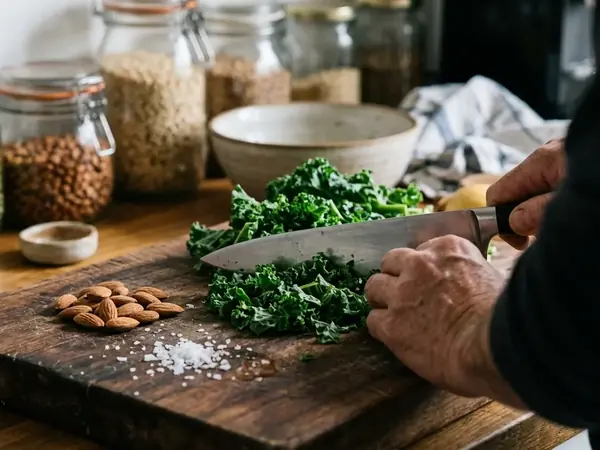
Field Note: Satiety is much easier to act on than abstract nutrient theory. Each jar is built by checking whether it contains a slow-digesting carbohydrate, a protein source, and a healthy fat.
For overnight oats, a reliable base ratio is one part rolled oats to 1 to 1.25 parts plant-based milk by volume. Thicker jars use the lower end, while spoonable jars use the higher end. For chia pudding, a dependable texture range requires three to four tablespoons of chia seeds per one cup of plant-based milk, with a stir at mixing and a second stir after 10 to 15 minutes to prevent clumping.
A balanced breakfast jar can use half a cup of rolled oats or three tablespoons of chia seeds, paired with 0.75 to one cup of unsweetened fortified plant milk. Add one to two tablespoons of nut or seed butter and a quarter to half a cup of fruit.
Proper storage techniques preserve the nutritional integrity of these fresh ingredients. Prepared jars should be kept at 34 to 40°F with lids closed tightly to reduce moisture loss and refrigerator odors. Cut berries and sliced bananas soften fastest. Diced apple, frozen berries, cacao nibs, toasted coconut, and nuts tolerate two to four refrigerated days much better when stored separately.
What Do You Need to Set Up Your Prep Environment?
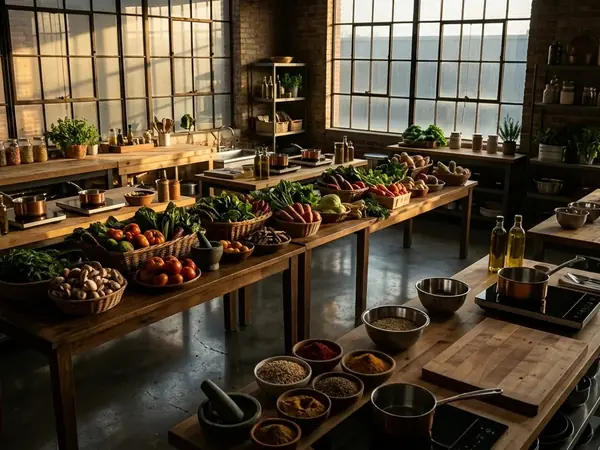
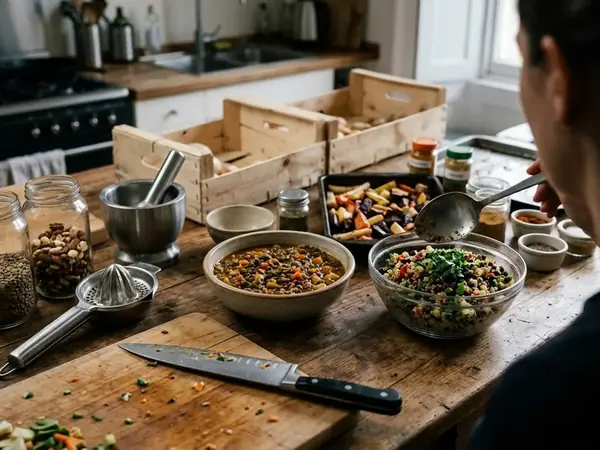
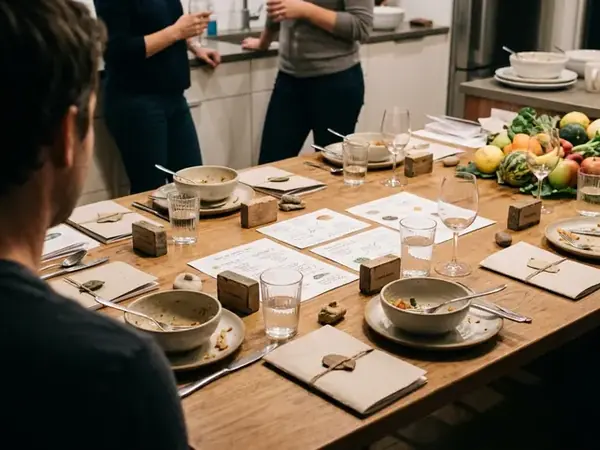
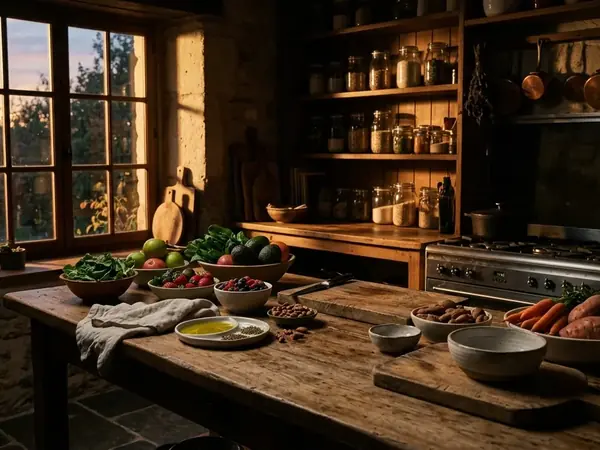
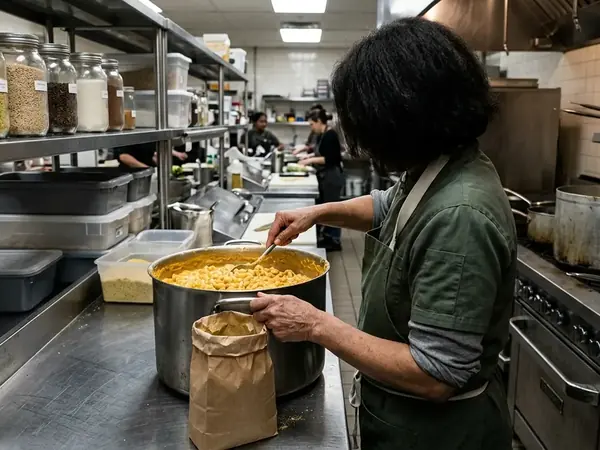
The ideal kitchen setup for efficient batch cooking mirrors a teaching station. Drawing inspiration from the spacious, organized layout used at the MessHall workshop venue, ingredients remain visible and tools are grouped by task. Containers are staged before any food is opened.
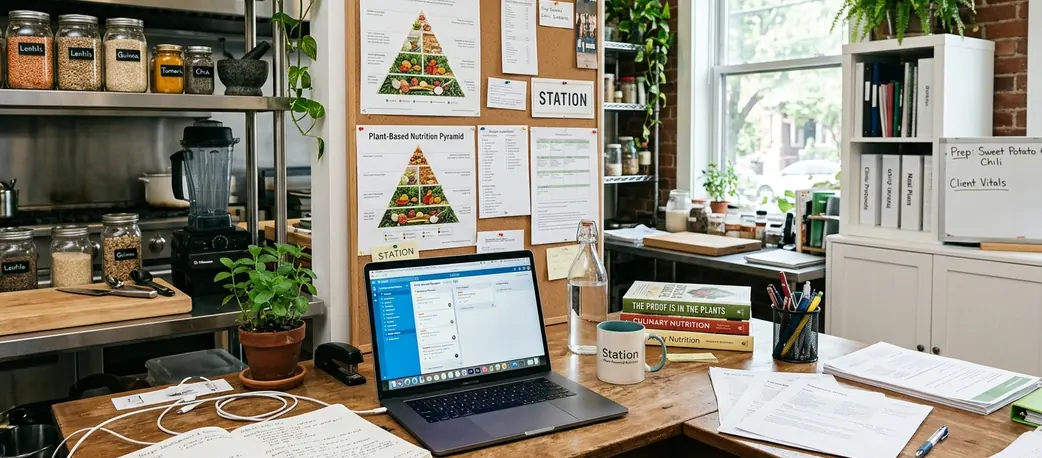
Set aside a clear work surface of roughly three by four feet for a five-jar batch. This ensures dry ingredients, liquids, empty jars, and finished jars do not overlap. Use 12 to 16-ounce lidded glass jars for breakfast portions. Eight-ounce jars work better for snack chia puddings, while 24-ounce containers suit lunch bowls.
Essential tools include dry measuring cups, a liquid measuring cup, measuring spoons, a silicone spatula, and a wide-mouth funnel. You will also need masking tape or removable labels, a marker, a rimmed sheet pan, and a clean kitchen towel.
Stage the empty jars on the rimmed sheet pan before filling. If one spills, the cleanup is contained and the entire batch can be moved to the refrigerator in one trip. Wash and dry greens, berries, and herbs before the main assembly session. Keep delicate toppings in separate containers until serving.
How Do You Make Chia Pudding and Overnight Oats?
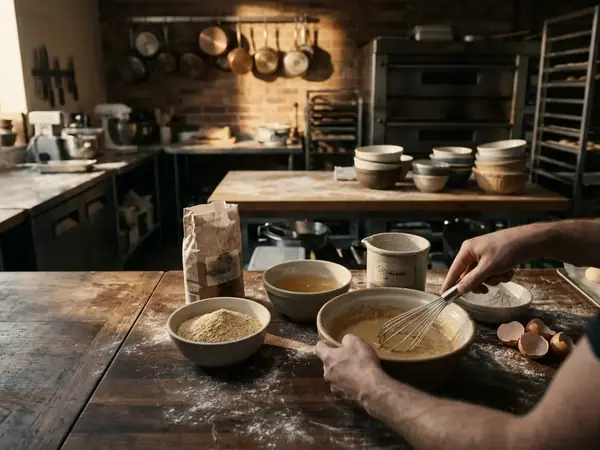
These two core projects share the exact same workflow while teaching completely different textures. Oats become creamy and chewy, while chia forms a thick gel. Taking recipe and photography inspiration from The Cozy Apron, the instructions start with the dry base.
For one chia pudding jar, add three tablespoons of chia seeds, 0.75 cups of plant-based milk, half to one teaspoon of maple or date syrup, a pinch of salt, and a quarter teaspoon of vanilla. Shake or stir the mixture, let it rest for 10 to 15 minutes, stir again, and chill for two to eight hours. High-protein plant milks and thick plant-based yogurts can make chia pudding set more firmly. The same seed measurement may need one to three tablespoons of extra liquid before serving.
Important: Steel-cut oats do not hydrate like rolled oats in a standard overnight jar and will remain noticeably firm without cooking.
For one overnight oats jar, combine half a cup of rolled oats, 0.5 to 0.625 cups of plant-based milk, one tablespoon of ground flax or hemp seeds, a quarter teaspoon of cinnamon, and a pinch of salt. Stir, cap, and chill for six to 12 hours. For a five-jar batch of overnight oats, measure 2.5 cups of rolled oats and 2.5 to 3.125 cups of plant-based milk before portioning so the liquid ratio stays consistent across jars.
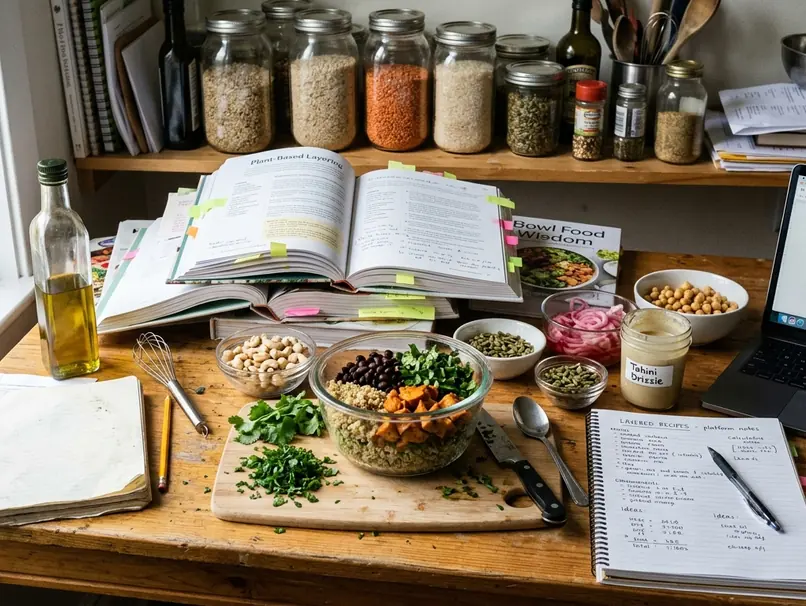
Layering order matters for cleaner jars. Add the oats or chia base, spices and seeds, plant-based milk, a thickener such as nut butter or yogurt, and then fruit. Grab-and-go quality is strongest when jars are filled no higher than 0.75 inches below the rim. This leaves room to stir in berries, nuts, or extra milk in the morning.
How Can You Scale Plant-Based Prep for the Whole Week?
Scaling a single recipe into a week's worth of food requires multiplication and texture management. The batch is easiest to control when the base recipe is multiplied on paper first.
Scale a single breakfast recipe by multiplying the dry base: half a cup of oats becomes two cups for four jars or 2.5 cups for five jars. Adding sliced banana, granola, and toasted nuts on prep day can produce brown fruit and soft toppings by the second morning, even when the oat base is still safe and palatable.
For four to five days of refrigerated breakfasts, keep watery fruit, toasted nuts, granola, cacao nibs, and coconut flakes in separate four to eight-ounce containers until the day of eating. Use a three-day topping rotation to keep meals interesting. Try berries and hemp seeds on day one, apple and cinnamon on day two, and banana with nut butter on day three. Repeat the pattern rather than inventing a new jar each morning.
If jars thicken too much after 24 to 48 hours, stir in one to three tablespoons of plant-based milk immediately before eating. Label each jar with the prep date and base type. A simple piece of tape reading "Sun PM oats" or "Mon chia" provides enough information to manage freshness without a complicated tracking system.
What Are the Key Takeaways for Healthy Meal Prepping?
The process integrates culinary skills with nutrition science to build a reliable routine. Learn the nutrition pattern, set up the station, assemble a small batch, and repeat until the routine feels automatic.
Bottom Line: Consistency in meal prepping leads to sustainable healthy eating habits. Start small with breakfast jars before expanding to full daily menus.
Start with two to three jars in the first week if five jars feels wasteful or monotonous. Increase the batch size only after the preferred texture and sweetness level are clear. A sustainable weekly rhythm involves one 45 to 75-minute prep block plus two to five minutes each morning for topping, stirring, or adding extra milk.
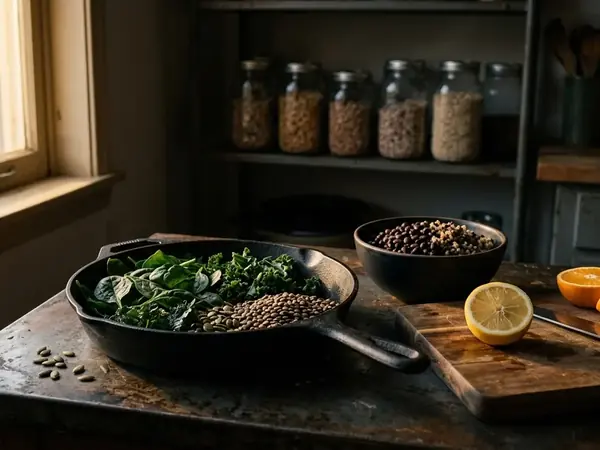
The most transferable formula follows the principles of healthy eating: combine a base, a protein-rich addition, a fat-rich addition, a fruit or vegetable, and a topping. A simple expansion path starts with breakfast jars for weeks one and two. Add one lunch base for weeks three and four, followed by a dinner component such as cooked lentils, roasted vegetables, or sauce after that.
Long-term experience revealed that refrigerated hold times assume clean utensils, sealed containers, and a refrigerator maintained at 34 to 40°F, with mixed jars chilled within two hours of assembly.
Plant-Based Breakfast Jar Prep Checklist
- Choose one base: rolled oats or chia seeds.
- Confirm jar count: 2 to 3 for a test batch or 4 to 5 for a workweek batch.
- Measure dry ingredients before opening plant-based milk.
- Use 12 to 16 ounce jars for full breakfast portions.