Why Is Achieving the Right Texture in Vegan Cheese So Hard?
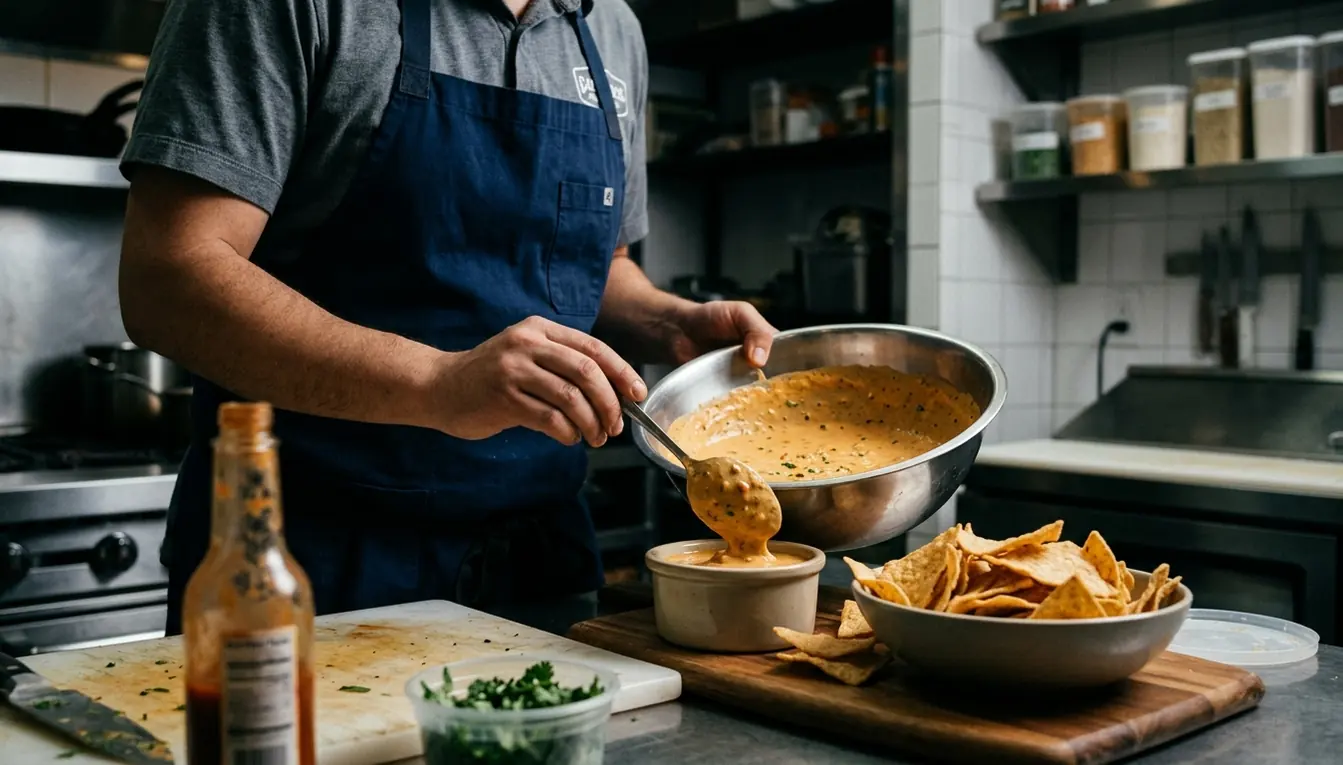
The texture target for a great dip is defined by what dairy queso does in the pan. It coats a chip, flows slowly, and stays glossy instead of turning pasty. Dairy cheese relies on casein proteins to trap fat and create that signature pull. Plant fats from nuts and oils soften quickly under heat but do not form the same elastic protein network—relying on fat alone leaves you with a greasy puddle.
The recipe needs a starch-based thickening step rather than relying on fat alone. A useful finished queso texture is thick enough to leave a visible trail for 2-4 seconds when a spoon is dragged through the pot, but loose enough to drip from a chip without tearing.
The best balance usually comes from a blend that is creamy first, mildly stretchy second, and savory enough to taste complete after a few minutes of heating.
What Are the Essential Ingredients for a Dairy-Free Base?
Building a successful base requires assigning each ingredient a specific job. Raw cashews provide the foundation because they blend into a pale, neutral puree. The fat composition of raw cashews contains enough natural richness to create a rounded mouthfeel after blending. Roasted cashews can make the dip taste nuttier and slightly darker, but raw nuts keep the flavor profile clean.
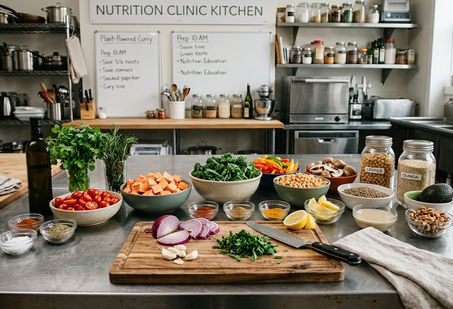
For a medium bowl of queso, start with 1 cup raw cashews, 1 1/4 to 1 1/2 cups water or unsweetened plant milk, 2-3 tablespoons nutritional yeast, and 1 1/2-2 tablespoons tapioca starch.
Tapioca starch is critical for achieving the signature stretch and glossy finish of traditional queso. It begins changing the sauce from thin to glossy during the heating stage. The visible shift usually happens after 2-4 minutes over medium-low heat once the mixture is hot and steaming. Finally, nutritional yeast delivers the glutamic acid necessary for savory umami notes.
How Do You Build Authentic Cheesy Flavor Without Dairy?
Long-term experience revealed that layering flavor in the exact order a cook perceives it yields the most authentic results. You want tang first, background warmth second, and fresh chile-garlic aroma last. Keep the acid modest so the dip reads as cheese-like rather than a vinaigrette.
Use 1 tablespoon lemon juice or apple cider vinegar for the first blend. Adjust with an extra 1-2 teaspoons only after heating, because warm starch-thickened sauces taste less acidic than cold purees.
For a 1-cup cashew base, a balanced spice range is 1/2 teaspoon smoked paprika, 1/4-1/2 teaspoon ground cumin, and 1/2-1 teaspoon chili powder. Roast 1 jalapeño under a broiler for 5-8 minutes, turning once, until the skin blisters in dark patches. Remove most seeds for mild queso or leave some in for a sharper finish. Blend garlic and onion into the sauce when using raw aromatics, but fold in the diced roasted jalapeño after heating if you want visible chile pieces and a less bitter flavor.
What Are the Steps to Blend and Heat Your Queso?
The method must be sequenced to prevent the two most common defects: grit and glueyness. Soaking comes before blending so the cashews shear into a smooth puree. Tapioca is blended while cold so it disperses evenly without clumping.
Soak cashews in just-boiled water for 25-35 minutes, or in room-temperature water for 6-8 hours. Drain them before blending so the soaking water does not bring stale or tannic flavors into the dip. Blend the drained cashews with 1 1/4 cups liquid at first. Add 2-4 tablespoons more liquid only if the blender stalls or the sauce looks thicker than pancake batter before heating.
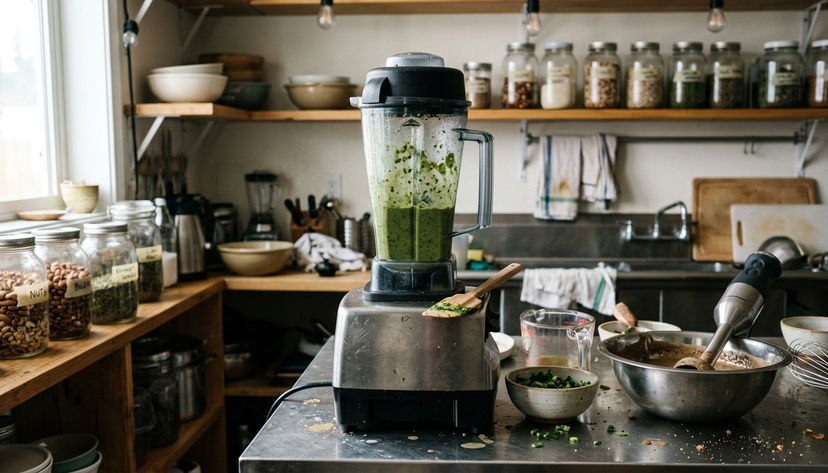
Run a high-speed blender for 60-90 seconds, scraping once if needed. In a standard blender, blend for 2-3 minutes and pause once to prevent heat buildup. Transfer the puree to a saucepan and cook over medium-low heat for 4-6 minutes. Whisk nearly continuously until the sauce turns glossy and stretches in short ribbons from the whisk.
Field Note: A stick blender usually leaves more cashew particles behind, so overnight soaking and a fine-mesh strain are helpful when that is the only tool available. While our optimal texture guidelines apply to high-speed blending, this manual workaround gives a smooth result with basic equipment.
Where Do Most Vegan Queso Recipes Fall Short?
Community feedback indicates that failure points become obvious when you separate texture problems from flavor problems. Graininess usually comes from under-hydrated nuts or weak blending. A sauce made with unsoaked cashews and a low-power blender can look creamy in the jar but feel gritty after heating because starch thickening traps the nut particles in place. If the sauce feels sandy on the tongue after blending, give the cashews another 15-20 minutes in hot water and re-blend before adding heat.
Gumminess often comes from too much starch or boiling the mixture. Once the queso thickens, keep it below a rolling boil. Vigorous bubbling for longer than 1-2 minutes can make the sauce turn rubbery or separate at the edges. If the dip tightens too much, whisk in warm water 1 tablespoon at a time until it returns to a slow-pouring consistency.
Potato-and-carrot versions present their own limitations. They can become heavy when the cooked vegetables exceed the liquid by volume. They also bring natural sweetness that may need 1-2 extra teaspoons of acid to balance.
How Can You Serve and Store Your Plant-Based Queso?
Serving and storage strategies revolve around starch behavior after cooking. Tapioca-thickened queso is most fluid right after heating, firms as it cools, and loosens again with gentle heat plus added water.
Serve within 10-20 minutes of cooking for the smoothest texture, especially with tortilla chips, roasted cauliflower, baked potatoes, grain bowls, or nachos. A thicker nacho topping benefits from the higher end of the tapioca range, while a pourable dip for chips needs more liquid and gentler reheating.
Store the leftovers in a shallow airtight container after cooling for 20-30 minutes. Pressing parchment directly on the surface helps prevent a dry skin from forming. Refrigerate for 3-4 days. The dip will thicken substantially once cold because the starch gel firms. Reheat over low heat for 3-5 minutes, whisking in 1-3 tablespoons water or unsweetened plant milk per cup of queso until glossy again.
Bottom Line: Home Vegan Queso Control Checklist
- Cashews soaked: 25-35 minutes in just-boiled water or 6-8 hours at room temperature.
- Liquid ratio checked: 1 cup drained cashews to 1 1/4-1 1/2 cups water or unsweetened plant milk.
- Stretch builder included: 1 1/2-2 tablespoons tapioca starch.