Why a Post-Workout Shake Leaves You Hungry Sooner Than Expected
You rinse out a shaker bottle soon after training, and before your gym clothes reach the washing machine, your stomach is already signaling for a full meal. That familiar return of appetite often gets blamed on protein powder failing to do its job, yet the issue lies in asking an isolated nutrient supplement to act as a complete meal.
A scoop of protein isolate mixed with cold water delivers concentrated protein while leaving out the broader physiological signals that establish lasting fullness. Concentrated protein isolates require enzymatic breakdown in the gut, unlike hydrolyzed formulations that undergo additional processing prior to packaging, yet a plain water-and-powder drink still lacks substantial food energy, carbohydrate, dietary fat, and physical bulk. Post-exercise appetite reflects both the metabolic demands of the training session and the adequacy of your energy intake across the entire day. When you consume protein in isolation, you address amino acid availability while leaving energy balance and gastrointestinal stretch largely unaddressed.
Evaluating post-training recovery requires looking at the entire feeding rather than comparing a single ingredient against a plate of food. When I design recovery protocols for evening athletes, I look at five distinct variables that separate a thin shake from a structured plant-based meal:
- Protein provision: Supplying the structural building blocks for tissue repair.
- Carbohydrate availability: Replenishing cellular fuel alongside the protein dose.
- Dietary fiber: Adding non-digestible bulk that alters how food moves through the digestive tract.
- Native lipids: Incorporating fats that slow down digestive transit.
- Oral processing: Requiring mechanical chewing before swallowing.
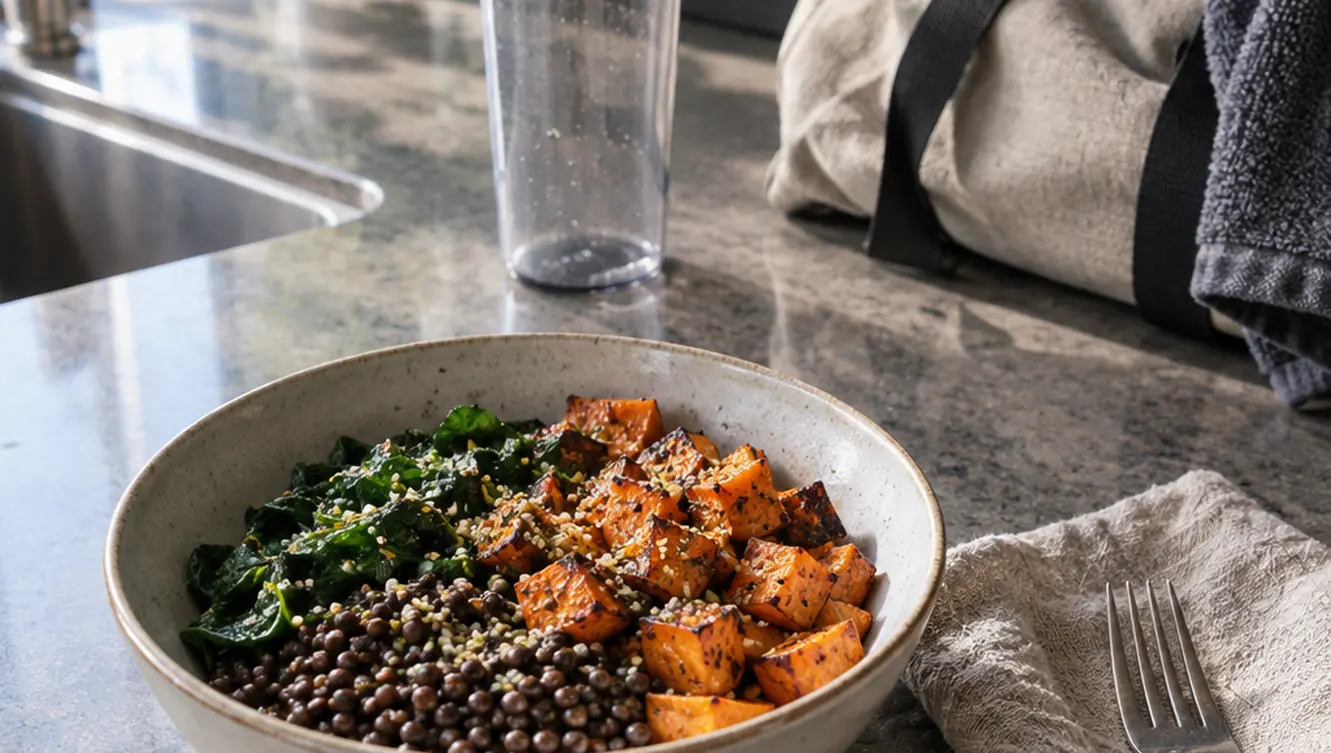
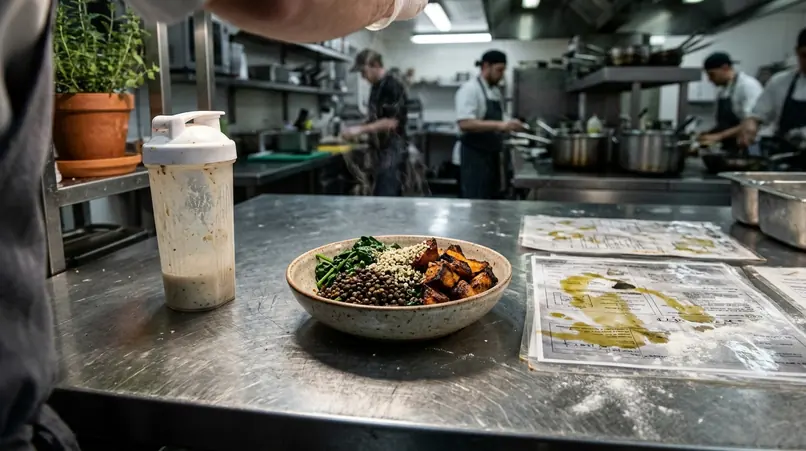
Shifting from default water-based shakes to structured plant-based plates—combining foods like black lentils, roasted sweet potato, spinach, and hemp seeds—changes all five variables at once to stabilize between-meal energy.
How Chewing Initiates the Cephalic Phase of Digestion
Solid meals engage the digestive system before a single bite reaches the stomach. The sight, aroma, and taste of whole foods trigger anticipatory responses known as the cephalic phase of digestion. As you chew solid food, neural signals traveling along vagal pathways coordinate enzymatic release and prepare the gastrointestinal tract for incoming fuel.
Mastication mechanically breaks food into smaller pieces and saturates them with saliva, where salivary amylase immediately begins breaking down starches. There is no mandatory chew count required to unlock fullness; chewing until a bite reaches a comfortably swallowable texture is the practical endpoint. This oral processing period directly supports satiation, which is the physiological signaling that brings an active eating episode to an end, setting the stage for satiety, the lasting suppression of hunger between meals.
Oral Processing Pace: Swallowing a liquid drink in seconds minimizes oral exposure time, though intestinal nutrient receptors still detect the incoming fuel and release appetite-regulating hormones once the liquid exits the stomach.
Once swallowed, solid food particles must undergo further mechanical and chemical breakdown in the stomach before they are fine enough to pass through the pyloric sphincter into the small intestine. Liquids do not require this particle-reduction step. A thin drink mixed with water empties from the stomach much faster than a solid plate, though gastric emptying also responds to total calorie density, viscosity, fat, and protein—meaning a thick, nutrient-dense blended smoothie behaves very differently in the stomach than plain water and powder.
The Intact Plant Matrix Compared to Isolated Protein
A food's physical structure—its matrix—governs how easily digestive enzymes can reach and break down the nutrients inside it. Protein isolation intentionally strips away plant cell walls, water-binding fibers, and native lipids to yield a fine, rapidly dispersing powder. Even in this concentrated state, protein powder contains intact proteins that your digestive tract must break down into absorbable peptides and amino acids.
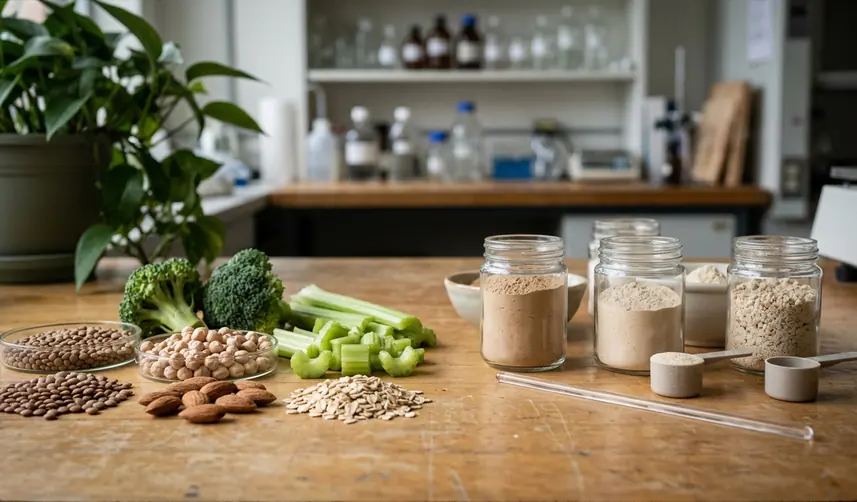
Whole and minimally processed plant protein sources arrive with their structural companions intact or partially preserved, offering distinct culinary and physiological properties:
- Black beluga lentils: Retain intact seed coats and cellular walls that enclose protein and starch together, requiring both cooking and thorough chewing to make those nutrients accessible to digestive enzymes.
- Fermented tempeh: Binds whole cooked soybeans into a dense cake through fermentation, altering the soy matrix while preserving a firm, chewable texture and native dietary fiber.
- Roasted edamame: Provides a dry, crunchy whole-soybean format that demands substantial mastication and supplies protein, fiber, and complex carbohydrates in one package.
- Hulled hemp seeds: Have had their tough outer shells mechanically removed, meaning they are a processed food rather than a collection of completely unbroken plant cells, yet they retain a rich combination of plant protein and polyunsaturated fats.
Inside the digestive tract, the fibers present in legumes and seeds serve different mechanical roles. Soluble fibers absorb water and form a viscous gel that slows the mixing and movement of chyme through the small intestine, whereas insoluble fibers provide structural bulk without forming that gel. Intact plant cell walls also physically restrict how quickly digestive enzymes access enclosed starches and proteins. While a plain protein isolate mixed with water does not inherently trigger a sharp blood glucose spike and subsequent crash—since carbohydrate content and total meal composition govern glycemic fluctuations—pairing proteins with cellular fiber and fat creates a steady, measured delivery of both energy and building blocks.
When Liquid Nutrition Holds a Tactical Advantage
Despite the structural advantages of a cooked plate, liquid nutrition remains a highly practical tool when logistics or training schedules make eating a solid meal difficult. Airport transit, tight work breaks, low appetite, or double training days with closely spaced sessions often favor a portable drink. Because the time interval between workouts does not create a fixed universal cutoff where solid food stops working, choosing a drink comes down to individual gastrointestinal comfort and schedule constraints. High acute stress can also shift appetite and gut sensitivity, making a liquid format feel far more manageable than a heavy plate, even though stress does not render solid food uniformly indigestible.
When a liquid feeding is the right tactical choice, you must decide whether the moment calls for a compact protein supplement or a complete liquid meal. If you need a full meal replacement that slows gastric emptying and sustains fullness, you can build viscosity, fiber, carbohydrate, and fat directly into the blender:
- Pre-gel the soluble fiber: Mix 1 tablespoon of whole chia seeds with 3 tablespoons of water and let it stand until evenly gelled before adding it to the blender pitcher.
- Load the dry and frozen base: Add one serving of plant protein powder (measured according to the product label), 30 grams of rolled oats, 1 tablespoon of tahini, and 100 grams of frozen berries.
- Control the viscosity: Pour in your chosen liquid gradually while blending until the mixture reaches either a drinkable consistency or a thick, spoonable texture.
- Reintroduce chewing: If time allows, serve the thick blend in a bowl topped with 1 tablespoon of raw pumpkin seeds, eating it with a spoon to restore oral processing and mastication.
Adding oats, hydrated chia, tahini, and berries upgrades the shake's energy and fiber profile, and spooning it over pumpkin seeds restores the act of chewing, though a pulverized blend still will not replicate the unbroken cellular walls of cooked whole lentils. While extra fiber and tahini extend fullness between meals, they also increase digestive complexity and can trigger gastrointestinal discomfort if consumed right before another hard training bout; a thick recovery bowl excels when your training is finished for the day, whereas a simpler drink suits tight turnarounds between sessions.
Assembling a 15-Minute Post-Training Whole-Food Plate
When your evening session wraps up and you need a complete recovery meal that delivers lasting satiety without an hour of kitchen prep, you can assemble a warm, chewable plate in about fifteen minutes using pre-cooked staples. Follow these steps to build a single recovery meal from cooked black lentils and roasted sweet potato:
Step 1: Measure the Structural Base
Set out 150 grams of pre-cooked black lentils, 100 grams of cooked roasted sweet potato cubes, two generous handfuls of washed baby spinach, and 2 tablespoons of hulled hemp seeds next to the stove. Ensure any packaged pre-cooked legumes or leftover roasted tubers have been stored according to their label instructions and food-safety guidelines.
Step 2: Bloom the Aromatics and Warm the Lentils
Place a skillet over medium heat and add 1 teaspoon of extra-virgin olive oil. Stir in 1/4 teaspoon of ground cumin for a few seconds until fragrant, taking care to keep the spice from scorching. Add the 150 grams of cooked black lentils to the skillet and stir occasionally for 4 minutes to begin warming the legumes through and coating them in the cumin-infused oil.
Step 3: Build Volume and Wilt the Greens
Add the 100 grams of roasted sweet potato cubes to the skillet with the lentils, stirring until both the tubers and the lentils are steaming and hot right to the center—rely on the internal heat of the food rather than the four-minute initial timer alone to verify safe reheating. Fold in the two generous handfuls of baby spinach, adding a tiny splash of water if the pan surface is dry, and turn the mixture with a spatula just until the leaves wilt into the warm base.
Step 4: Whisk the Emulsion and Plate
While the spinach wilts, combine 1 tablespoon of tahini and 1 tablespoon of fresh lemon juice in a small cup, stirring in cold water 1 teaspoon at a time until the mixture loosens into a pourable dressing. Transfer the hot lentil, sweet potato, and spinach mixture to a wide dinner plate, scatter the 2 tablespoons of hulled hemp seeds evenly across the top, and drizzle with the lemon-tahini dressing to finish a recovery meal that keeps its distinct textures intact for every bite.